Japan / Bizen City · Hinase · Yoshinaga · Shizutani School
Walking Through Bizen City, Part II — Sea, Learning, and Mountain Villages
The islands of Hinase, the valleys of Yoshinaga, and the Former Shizutani School reveal another Bizen, formed by distinct environments and shared challenges.
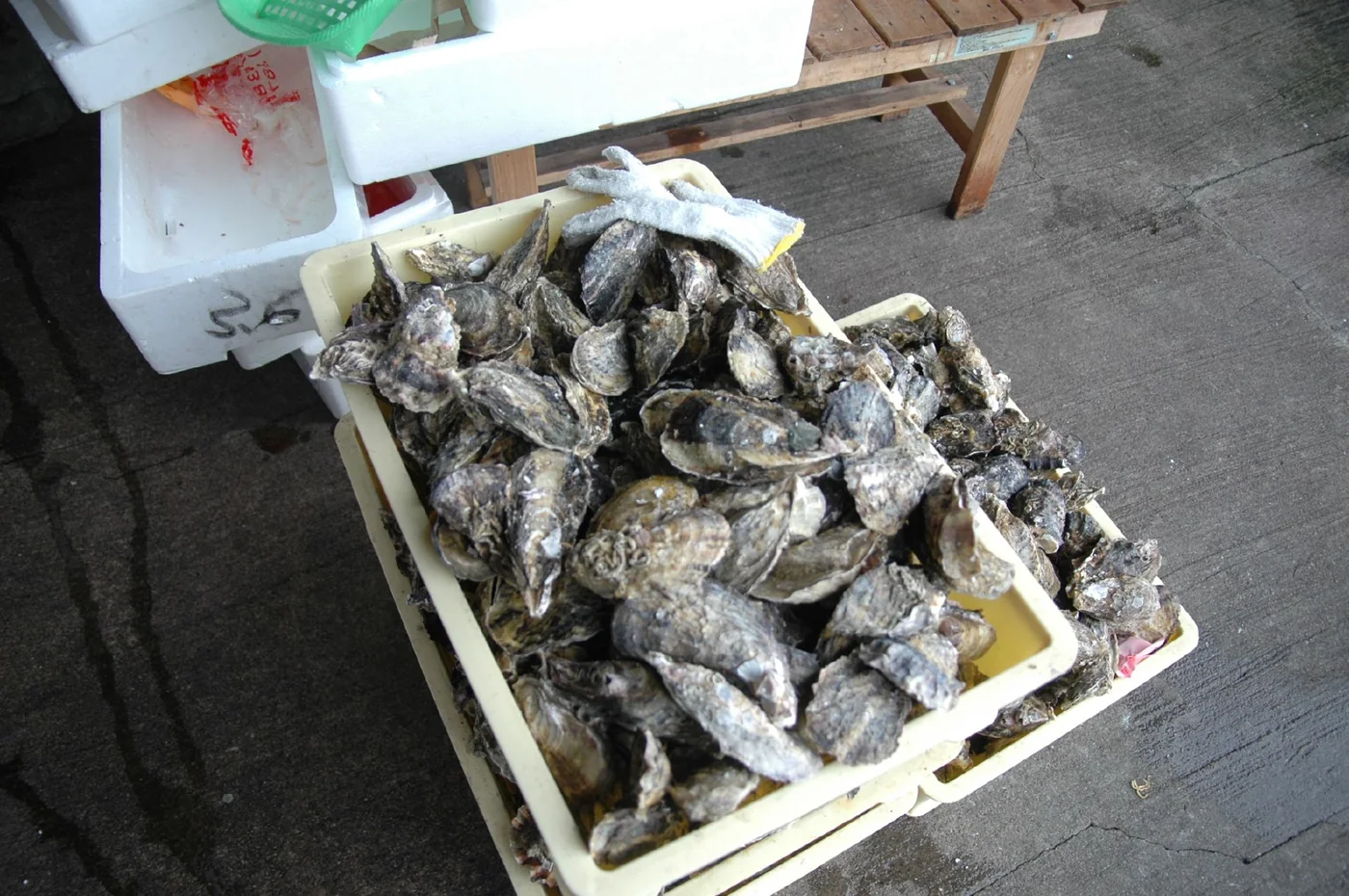
Part I followed the outlines of the former Bizen area through Inbe, Katakami, and Mitsuishi. Since 2005, however, Bizen City has also included the maritime district of Hinase and Yoshinaga in the north.
Sea and islands, narrow riverside plains, and mountain settlements exist beneath one municipal name. This is more than an administrative fact. It is a way into understanding the city.
Hinase — When the Sea Was a Road
At Hinase, mountains approach the coast and leave little level ground. Beyond them lie the Hinase Islands, including Ōtabu, Kakui, and Kashira. According to the city’s official account, thirteen islands of various sizes are scattered across these waters.
The sea here was never simply a boundary where land ended. It was a road between islands and ports, and a place of work. Boatmen serving the Okayama domain lived here during the early-modern period; fishing and maritime transport sustained the district. Fishing still operates from Hinase Port, though the industry has increasingly turned from coastal catches toward aquaculture, especially oysters.
Hinase oysters are now one of the district’s defining winter foods. “Kakioko,” okonomiyaki cooked with oysters, transformed a marine product into a local cuisine. What begins as a harvest does not end at the market: it becomes a shop curtain, a meal, and a traveler’s memory.
The Day an Island Became Closer
Transportation changes island life. Kashira Island was once reached by boat, but bridges through Kakui Island now connect it to the mainland by road. Movement became easier and the island became more accessible to visitors. At the same time, the rhythms and communities preserved by separation entered a period of change.
A bridge shortens distance, but it does not erase it. An island’s history is not absorbed into the mainland the moment a road opens. Knowledge of the sea, local festivals, and the shape of settlements retain the memory of island life.
Yoshinaga — A Mountain Town Opened by Rivers
Yoshinaga in the north presents an opposite landscape. Mountains surround the district, with narrow strips of level land along the Hattoji and Kongō rivers. The San’yō Main Line follows the Kongō River toward the border with Hyogo.
The Hattoji district developed around temples and a mountain settlement. Today, the Hattoji Furusato Village preserves a rural landscape that includes thatched houses and terraced fields. Tradition also remembers it as a religious center once important enough to be called “the Kōyasan of the West.”
Nature here was a condition of life before it became an object of scenery. Generations had to work with slopes, water, forests, and limited farmland. Their responses gave order to the landscape now admired by visitors.
A School Built in a Quiet Valley
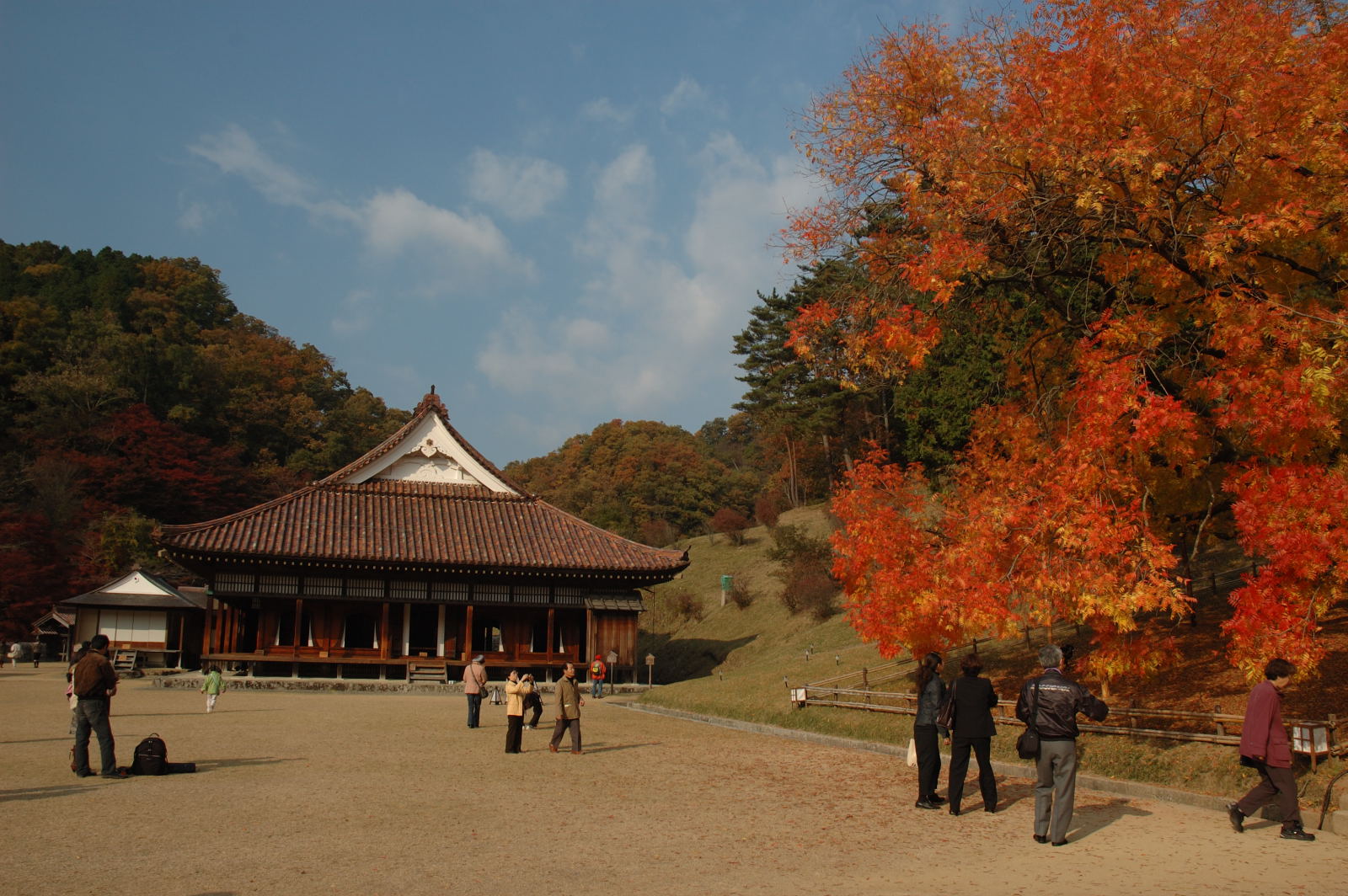
The Former Shizutani School is essential to any account of Yoshinaga.
Ikeda Mitsumasa, lord of the Okayama domain, conceived a school for the education of common people. In 1670 he instructed his administrator Tsuda Nagatada to develop a permanent institution at Shizutani. The lecture hall is now a National Treasure, while the school gate, Confucian sanctuary, and many other structures are designated Important Cultural Properties. Its stone walls, Bizen-ware roof tiles, and wooded surroundings create a space governed by a single idea.
Its significance lies in more than age. The domain attempted to sustain commoners’ education as a lasting institution. Education needs more than ideals: it needs teachers, buildings, land, and income for maintenance. Shizutani expresses in architecture what it means to preserve a place of learning for generations not yet born.

Merger Does Not Mean Sameness
The 2005 merger placed Bizen, Hinase, and Yoshinaga within a single municipality. It did not make their histories uniform.
The kilns of Inbe, the refractories of Mitsuishi, the port of Katakami, oyster farming in Hinase, mountain villages in Yoshinaga, and the school at Shizutani grew from different geographic and historical conditions. The strength of modern Bizen is not that they can be reduced to one attraction, but that such differences can be experienced within a relatively small area.
They also share problems: population decline, a shortage of successors, the transmission of industry and heritage, and transportation between districts. Preservation alone cannot sustain daily life, while an exclusive pursuit of growth can erase the memory specific to a place. The task is neither to turn the past into a specimen nor to discard it in the name of the future. It is to translate what has been inherited into forms that the next generation can use.
What Is Bizen City?
Bizen is a city of mountains and sea. It fires pottery and industrial refractories, cultivates fish and oysters, and cares for a school more than three centuries old. It also carries the name of an ancient province while remaining, in its present form, a relatively young municipality established in 2005.
No single landmark can reveal the whole. Its outline appears only in movement: from the heat of the kiln to the port, from the port to the islands, then upstream toward the mountain villages.
To introduce Bizen is not merely to list its attractions. It is to see how lives formed in different landscapes now make one city together.
Sources and Image Credits
- Bizen City, “Introduction to Bizen City”
- Bizen City, Former Shizutani School
- Bizen City, history of the Former Shizutani School
- Bizen City Statistics, FY2025 edition
- Entries on Bizen City, Hinase, and Yoshinaga in the Nihon Rekishi Chimei Taikei, Encyclopedia Nipponica, and Heibonsha World Encyclopedia, accessed through the reference material supplied by the user.
- Lead image: oysters from Hinase, photograph by Ippei Suzuki, CC BY 2.0.
