Japan / Bizen City · History · Bizen Ware · Place
Walking Through Bizen City, Part I — Roads, Ports, and Kilns
On the southeastern edge of Okayama, beside the border with Hyogo, Bizen was shaped by movement: along highways, through ports, and between the earth and the kiln.
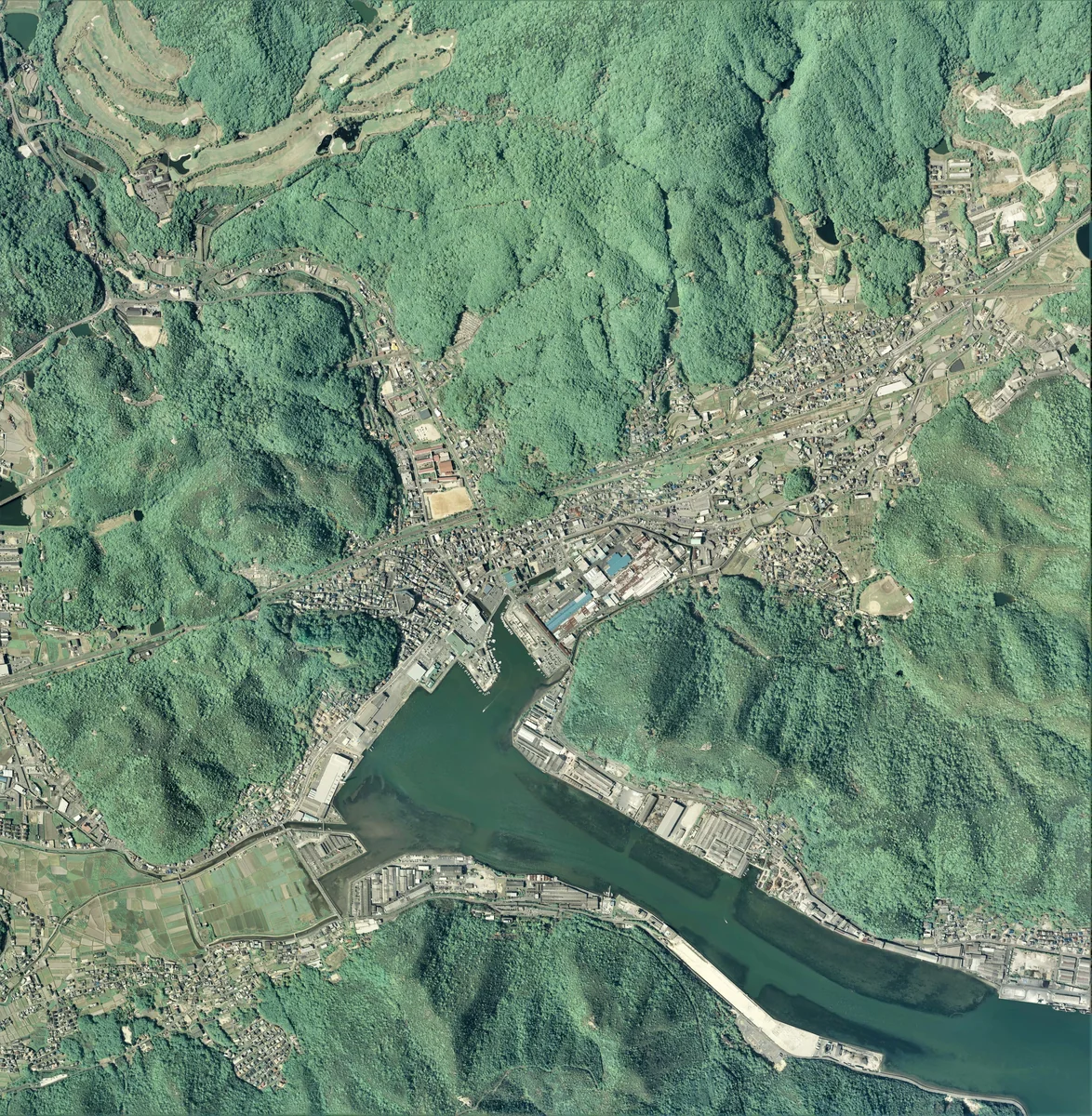
Bizen City is difficult to explain with a single photograph.
In Inbe, there are kilns and brick chimneys. At Katakami, a bay reaches deep into the land. Travel east and the road leads toward Mitsuishi and the border with Hyogo Prefecture; follow the coast and it reaches Hinase, facing a scatter of islands; turn north and it enters the mountain country of Yoshinaga. A pottery town, an industrial town, a port, fishing villages, and rural settlements occupy the same municipality.
The present city was formed on March 22, 2005, through the merger of the former Bizen City, Hinase Town, and Yoshinaga Town. It covers roughly 258 square kilometers. Forest occupies about three quarters of its territory, while its southern edge opens onto the Seto Inland Sea and its eastern boundary meets Hyogo.
This first part follows the roads, ports, earth, and fire that shaped the former Bizen area. Part II turns to the sea at Hinase, the mountain settlements of Yoshinaga, and the Former Shizutani School.
A Name Older Than the City
“Bizen” was originally the name of an ancient province covering the southeastern part of what is now Okayama Prefecture. The name therefore carries a history far older—and geographically wider—than the present municipal boundary.
The modern city also emerged by stages. Katakami and Inbe merged in 1951 to form Bizen Town. After further municipal consolidation, that town joined Mitsuishi in 1971 to establish the former Bizen City. The present city dates from the addition of Hinase and Yoshinaga in 2005.
Bizen is best understood not as a fixed area on a map, but as several places with different histories laid over one another.
Where the Mountains Make the Roads
Large, continuous plains are rare in Bizen. Rivers pass between hills and mountains; settlements developed in narrow valleys and along the sea. Human movement was concentrated into limited corridors, and highways, railways, and ports were built upon them in successive periods.
The ancient San’yō route linked the capital with western Japan. In the early-modern period, Mitsuishi and Katakami prospered as post towns along the San’yō highway. Katakami, historically known as a good harbor, connected the interior to the Seto Inland Sea. Railways followed in the modern era. Today the city is crossed by the San’yō Main Line, the Akō Line, national highways, and the San’yō Expressway.
Transportation is not an accessory placed upon the landscape. It has determined where people meet, what can be carried, and where industries grow. It is part of the city’s skeleton.
Inbe — Where Earth Becomes a Vessel
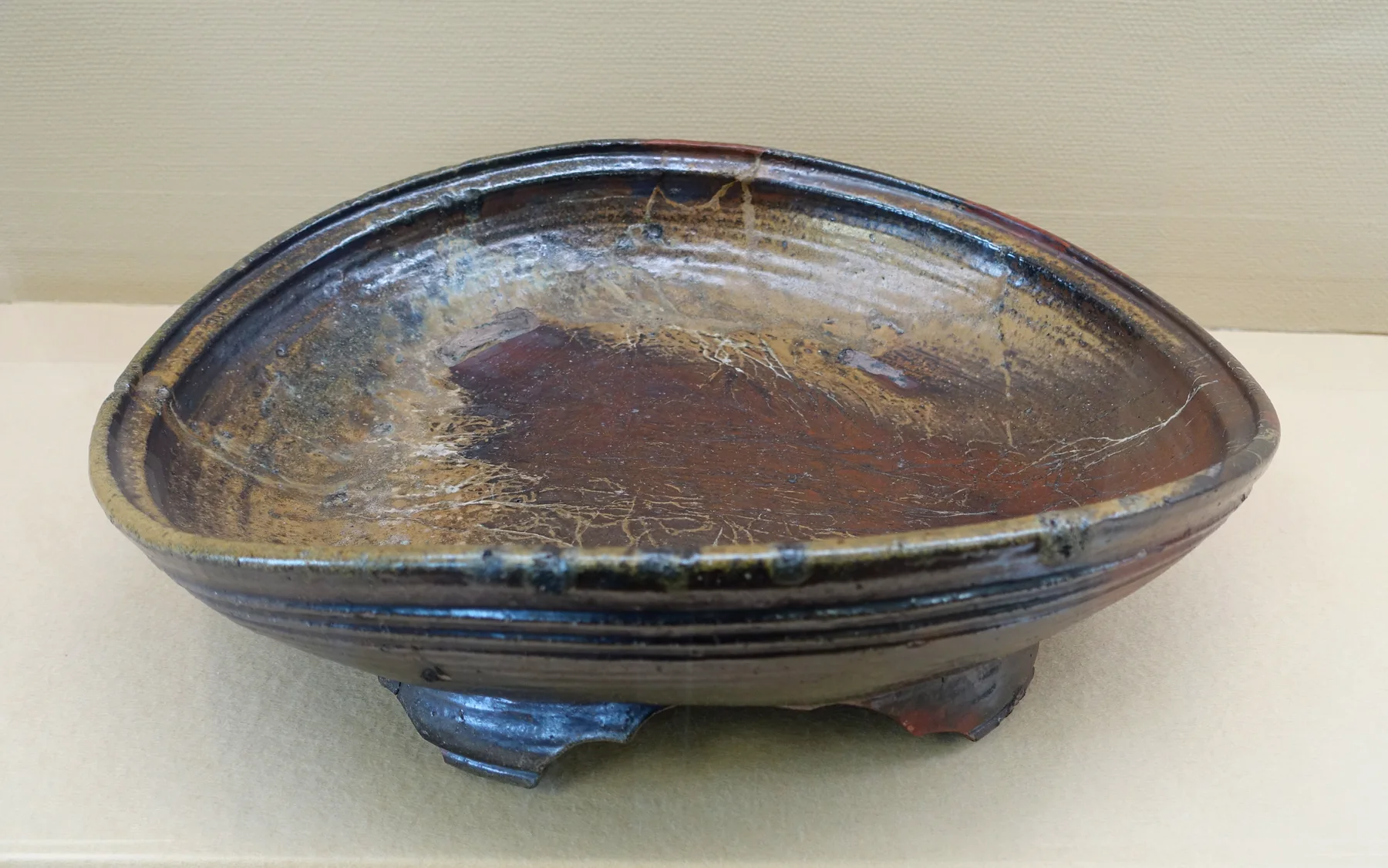
Bizen ware remains the city’s most widely recognized creation. In Inbe, practical jars, pots, and mortars were produced in large quantities from the medieval period onward. Bizen potters traditionally do not apply an artificial glaze. Long firing leaves the action of earth and flame visible on the surface. Wood ash may settle into a natural glaze, while the position of a vessel and the path of the fire produce markings that cannot be exactly repeated.
Bizen ware did not begin as an object made only for contemplation. It was durable household equipment, carried to distant markets through ports and along roads. Its history includes both art and distribution, individual expression and the repeated production of objects for daily life.

From the Pottery Kiln to Modern Industry
Knowledge of earth and fire did not remain confined to traditional craft.
Pyrophyllite deposits were found in Mitsuishi in the early-modern period. From the Meiji era, this mineral became a raw material for refractory brick. Refractories protect the interiors of furnaces operating at extreme temperatures. Though largely invisible in finished products, they are essential to steel, cement, chemical manufacturing, and other basic industries.
A refractory industry developed around Mitsuishi and Katakami and remains central to Bizen’s manufacturing economy. Bizen ware and industrial refractories differ in use and scale. Yet both grew from knowledge of local minerals, high heat, and the means of giving fired material durability.
A City Too Large for a Single Label
It is not wrong to call Bizen a pottery city. But that description alone makes the port at Katakami, the factories of Mitsuishi, and the routes connecting its settlements disappear.
Here, topography directed movement; movement fostered industry; and industry created new landscapes. Mountains, valleys, bays, roads, railways, kilns, and factories are not separate details. They are layers of time in which people responded to the conditions of a particular place.
Travel southeast or north, however, and the same city changes character again. There is the maritime world of Hinase and the mountain country of Yoshinaga.
Continue to Part II: “Sea, Learning, and Mountain Villages.”
Sources and Image Credits
- Bizen City, “Introduction to Bizen City”
- Bizen City Statistics, FY2025 edition
- Bizen City, Japan Heritage and the Six Ancient Kilns
- Bizen City, refractory industries
- Entries on Bizen City in the Nihon Rekishi Chimei Taikei, Encyclopedia Nipponica, and Heibonsha World Encyclopedia, accessed through the reference material supplied by the user.
- Lead image: aerial view of Katakami, Geospatial Information Authority of Japan; created from National Land Image Information.
