Japan / Sue Ware · Bizen Ware · Archaeology · Ceramics
What Is Sue Ware? From the Korean Peninsula to Bizen Ware
How did these hard, blue-gray vessels transform Japanese ceramics? A history of immigrant potters, tunnel kilns, the ancient state, and the road to Bizen ware.
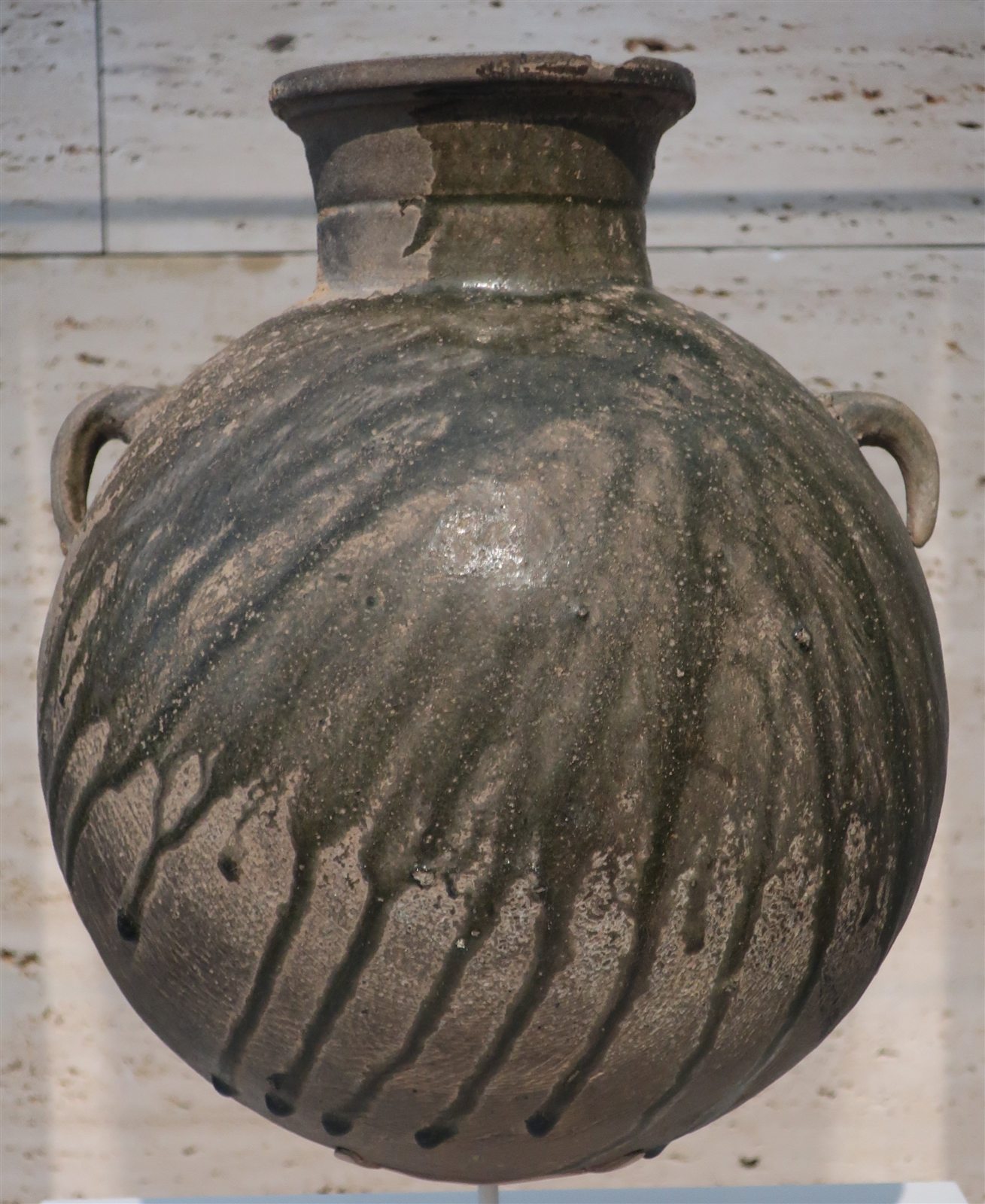
A hard, blue-gray vessel. Its quiet surface preserves the history of a technological transformation in Japanese ceramics—and of people who carried their knowledge across the sea.
Sue ware was produced from the Kofun period through the Heian period. It is often described as a predecessor or origin of Bizen ware, but the relationship cannot be reduced to a single, unbroken line.
To follow the transition from Sue ware to Bizen ware is also to see Japanese pottery change from vessels tied to the needs of the ancient state into commodities made for everyday life.
The Innovation Behind a Gray Vessel
Much Jōmon and Yayoi pottery, as well as Haji ware, was fired in an oxygen-rich atmosphere. Iron in the clay oxidized, giving these vessels their familiar reddish-brown color.
Sue ware was different. It was fired in an anagama, a tunnel-like kiln built into a hillside.
The kiln connected its firebox and flue within a single sloping chamber. Potters maintained high temperatures while restricting the supply of oxygen. This reducing atmosphere suppressed oxidation in the iron, turning the pottery blue-gray or gray-brown. Fired sufficiently, Sue ware became harder and less permeable than Haji ware.
Its color was not selected as a decoration. Gray was the visible result of kiln structure and the conditions of the flame.
Potters Who Crossed the Sea
The technology of Sue ware is believed to have reached Japan from the Korean Peninsula around the fifth century. Early examples are closely related in form and technique to the high-fired stoneware of southern Korea, especially the Gaya region.
Finished vessels were not the only things that traveled.
Immigrant communities of potters brought knowledge of kiln construction, high-temperature firing, clay preparation, vessel formation, and the organization of production. Sue ware is therefore better understood not as a foreign object simply copied in Japan, but as a ceramic tradition born from the movement of people and technology.
One of its earliest major centers was the Suemura kiln complex around present-day Sakai in Osaka Prefecture. From there, production spread rapidly. Within decades, kilns were operating across a wide area, from parts of northeastern Japan to Kyushu.
More Than the Potter’s Wheel
Sue ware is commonly introduced as pottery shaped on a wheel. Yet the entire vessel was not necessarily thrown in the modern sense.
For large jars and storage vessels, potters first built a rough form from coils of clay. They strengthened and thinned the walls through paddling and scraping, then used the wheel to adjust the rim and finish the surface. Size and strength came from the combination of several methods.
Kiln construction, forming, and firing all demanded specialist knowledge and coordinated labor. The arrival of Sue ware did not merely add another kind of object. It introduced a developed system of ceramic production.

From Tomb Offerings to Everyday Vessels
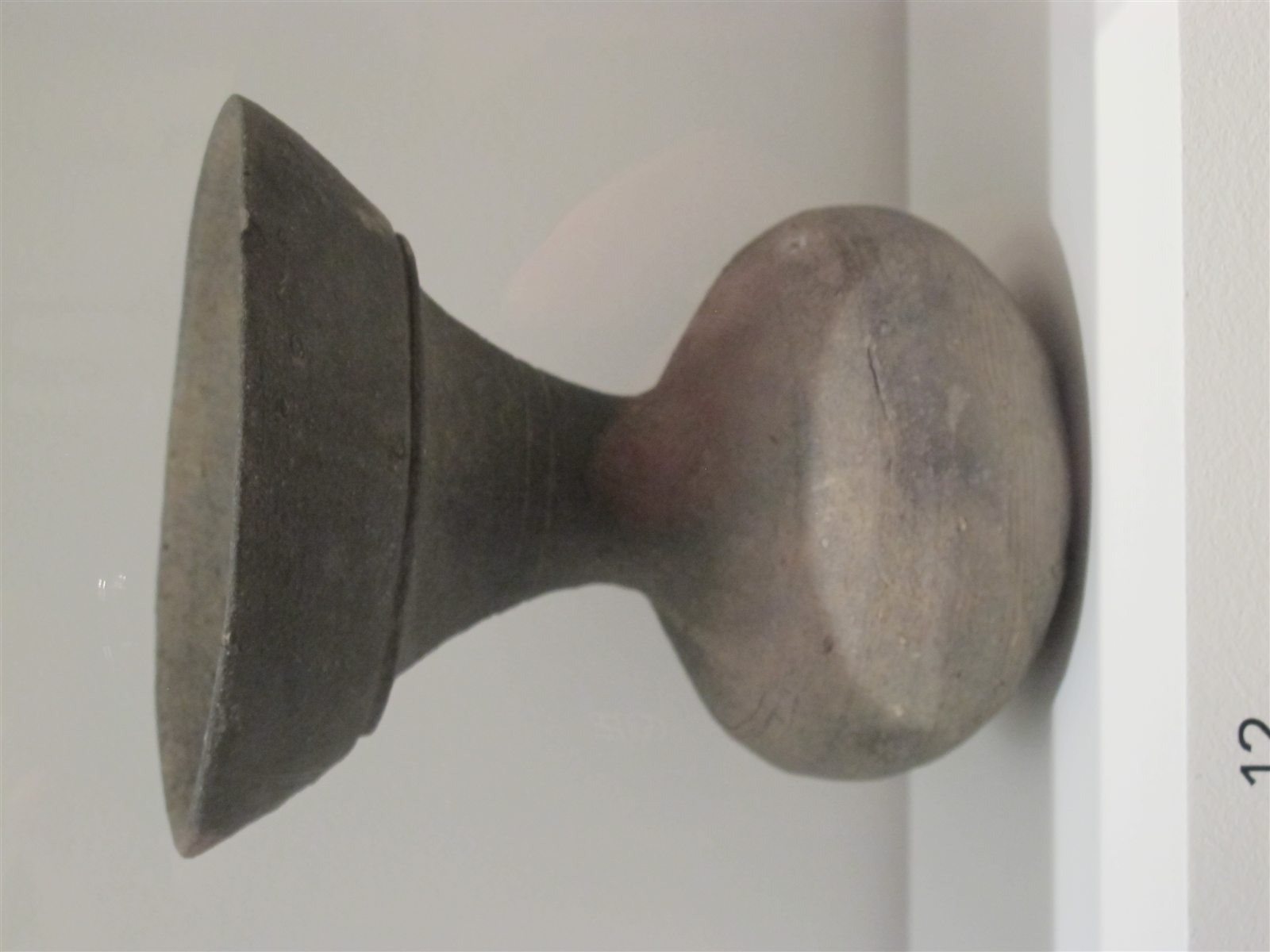
Kofun-period Sue ware included jars, cups, tall-footed vessels, and stands. Practical wares existed, but grave goods and ceremonial vessels accounted for a substantial part of production.
Some ceremonial jars carried small figures of people and animals. Scenes interpreted as wrestling, hunting, riding, or dancing now offer rare evidence of life and ritual during the Kofun period.
The role of Sue ware changed during the Asuka and Nara periods. Elaborate vessels for tombs declined, while cups, plates, trays, and bottles for dining and storage became more common. The spread of Buddhism brought forms such as ritual water bottles and bowls. Ceramic inkstones appeared in government offices and temples.
The pottery expanded from vessels for the dead into objects that supported the food, administration, religion, and writing of the living.
The Kanpū Kilns of Bizen
Sue ware production began in southeastern Okayama by the later Kofun period.
The Oku kiln complex, extending from southern Bizen City into present-day Setouchi City, preserves numerous ancient kiln sites. Among them, the Kanpū kilns became one of the San’yō region’s leading centers during the Asuka and Nara periods.
Many Kanpū vessels reveal highly controlled forming. On some, wood ash melted at high temperature and produced a pale green natural glaze. Examples made at Kanpū have been excavated at the Heijō Palace site, demonstrating that their circulation extended beyond the region.
Bizen Province also delivered Sue ware to the central authorities as a form of tax. Ancient pottery production was not yet a free commodity industry. It was deeply embedded in the institutions of the ritsuryō state.
Was Sue Ware the Ancestor of Bizen Ware?
There is good reason to call Sue ware an ancestor of Bizen ware.
South of Inbe in present-day Bizen City, production began in the later Kofun period. Kilns were distributed around Sayama and Kanpū in the Asuka and Nara periods. Through the Heian period, their center gradually moved north. By the end of that period, kilns had been established around Inbe, where the firing of unglazed ceramics continued.
Sue ware did not, however, become “Bizen ware” on a single identifiable day.
One interpretation places the beginning of Bizen ware in the late Heian period, when intensive production around Inbe began. Another favors the late Kamakura to early Nanbokuchō period, when reddish-brown vessels resembling what we now recognize as Bizen ware became common. Many late-Heian products from Inbe are gray and remain visually close to Sue ware.
The boundary therefore depends on what we emphasize: the establishment of production around Inbe, or the emergence of the color and forms associated with later Bizen ware.
There is technical and regional continuity between the two traditions. There was also a transformation in their society and purpose.
From Vessels of the State to Commodities
Ancient Sue ware production was closely connected to tribute, government offices, temples, and elite ritual. As the centralized order weakened in the late Heian period, the systems of production and distribution changed with it.
In the medieval period, pottery was increasingly made not only for the state and ruling groups, but as merchandise for ordinary use.
Bizen jars, storage vessels, and mortars traveled widely as strong tools for preserving, transporting, and preparing food. Practical durability mattered more than applied ornament. Resistance to breakage—and the ability to remain in use—became commercial value.
The high firing and unglazed surfaces inherited from Sue ware were reorganized within a medieval commodity economy. From that reorganization, a new ceramic industry emerged: Bizen ware.
Beyond the Gray Surface
Sue ware can appear austere. It has no brilliant applied glaze, and gray dominates its surface.
Behind that restraint, however, lies the ability to maintain high heat and control oxygen inside a kiln. There is the knowledge of potters who crossed from the Korean Peninsula. There are tombs, courts, temples, government offices, and households that required their vessels.
Bizen ware did not merely preserve this technology. It inherited it by changing its meaning—from production for the ancient state to manufacture for medieval markets, and from gray Sue ware to reddish-brown high-fired stoneware.
Follow the fire of Bizen ware backward into history, and one arrives at a Sue kiln.
Sue ware is more than an old ceramic that existed before Bizen ware. It marks one of the moments when communities in the Japanese archipelago learned to build kilns, control flame, and turn earth into an organized industry.
Sources and Image Credits
- Okayama Prefectural Ancient Kibi Cultural Properties Center, “The Beginnings of Bizen Ware”
- Bizen City, “The Development of Bizen Ware”
- Okayama Prefecture, kiln distribution from Sue ware to Bizen ware
- Hatoyama Digital Museum, “What Is Sue Ware?”
- Kyoto National Museum, decorated Sue ware
- Entries on Sue ware in Encyclopedia Nipponica, the Heibonsha World Encyclopedia, and the Nihon Kokugo Daijiten, accessed through reference material supplied by the user.
- Lead image: seventh-century Sue ware flask. Photograph by Wmpearl, Wikimedia Commons, CC0 1.0.
