Japan / Ceramics · Climbing Kilns · Bizen Ware · Craft
Noborigama: The Climbing Kiln and the Art of Sharing Heat
Why build a kiln on a hillside? Exploring connected firing chambers, the distinction from anagama, and the relationship between kiln design and Bizen ware.
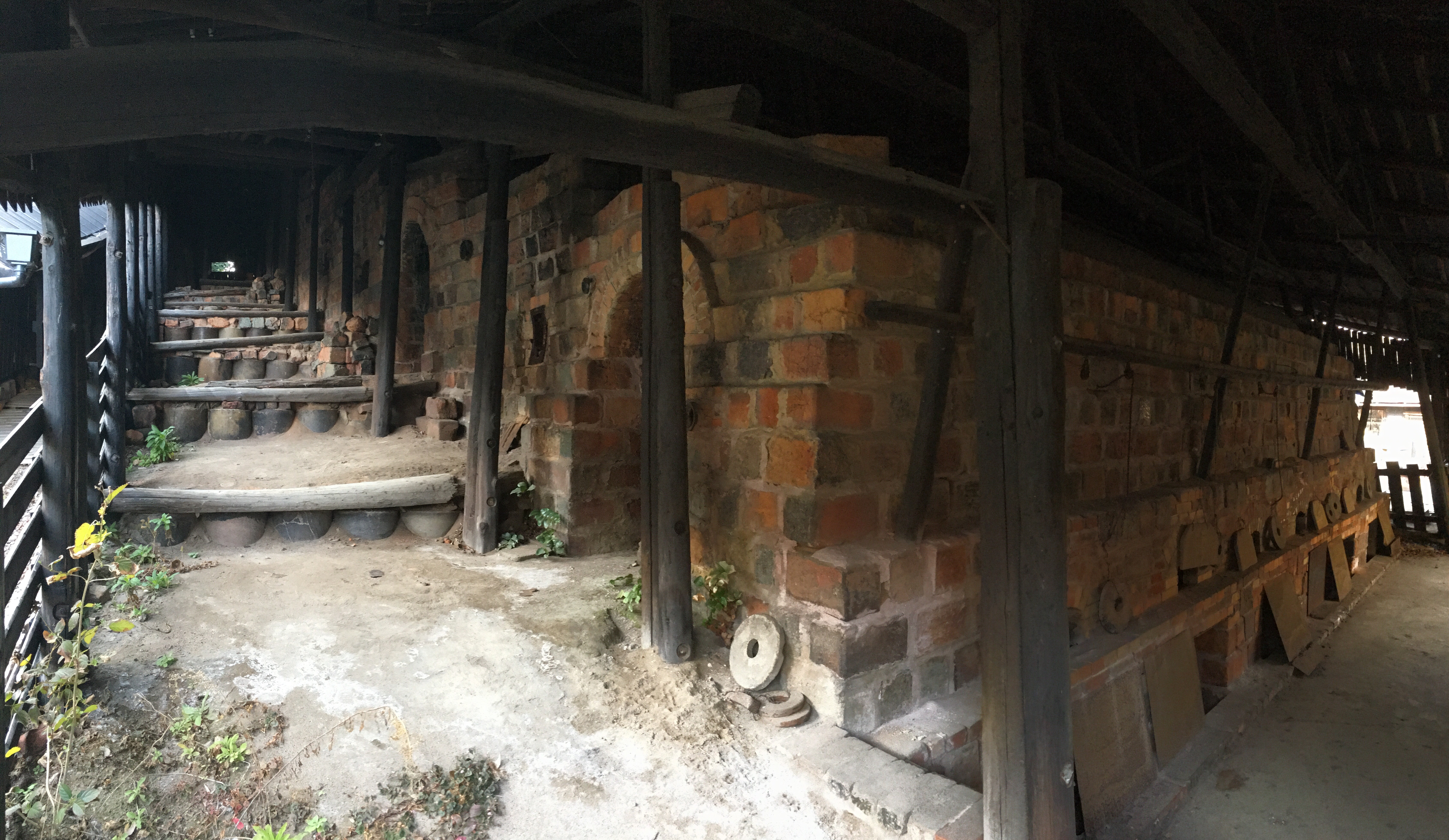
In pottery towns, a kiln may appear not as a furnace on level ground but as a long building ascending a hillside. Chambers enclosed in clay or brick rise in sequence, with space alongside for feeding fuel and working. The climbing kiln incorporates the terrain itself into the process of firing.
Yet “a kiln on a slope” is not a sufficient definition. How does it transfer heat? What does it fire? Which period and form of kiln are we discussing? Clarifying the term brings the work behind a ceramic vessel into view.
What is a noborigama?
A noborigama, or climbing kiln, is a kiln for firing ceramics that makes use of an incline. In the narrower sense, it means a multi-chamber kiln: several firing chambers connected in succession. Broader usage can also include sloping single-chamber forms such as the anagama and ōgama. This article focuses on the multi-chamber type.
The chambers contain the ware being fired. Connecting them uphill allows heat from a lower chamber to help warm those above it. Neither their number nor their size is fixed; these vary with the period, pottery center, and products being made.
The term therefore describes more than an outward shape. It identifies a design for using the heat generated by fuel across a succession of spaces.
Fire below, firing in sequence
In a multi-chamber climbing kiln, heat generated below passes through connected chambers toward the upper end. While one chamber is being fired, the exhaust heat preheats those farther along. The focus of firing moves progressively upward, with fuel added through the chambers’ stoking openings as required.
Using the heat from the first chamber does not mean that lighting a fire once is enough to complete the entire firing without further attention. Nor does the whole kiln reach the same temperature at once. Bizen City’s educational material explicitly cautions against that assumption. Bizen City, Bizen Ware Q&A 14
The flame does not simply travel straight upward, either. Partition walls and connecting passages direct hot gases through the interior. Bizen City explains that this arrangement brings the flame upward and downward before it passes into the next chamber, helping reduce temperature differences within a chamber. Actual flow patterns depend on the kiln’s design; the essential point is to circulate heat around the ware rather than let it escape immediately. Bizen City, Bizen Ware Q&A 17
How does it differ from an anagama?
An anagama generally has a continuous, tunnel-like interior rather than a succession of partitioned firing chambers. The key distinction from a climbing kiln in the narrower sense is therefore not simply whether it occupies a slope, but how its interior is divided.
It would be too simple, however, to describe the change from single-chamber to multi-chamber kilns as progress from an inferior design to a superior one. Fuel efficiency, output, and the desired appearance of the ware are not identical measures. Research published by the Aichi Prefectural Ceramic Museum describes instances in which the older ōgama structure remained in use after multi-chamber kilns appeared, because potters sought its particular firing results. Research by Kikuo Inoue
One kiln type did not necessarily disappear as soon as another emerged. Different designs coexisted, shaped by the vessels people wanted to make and their judgments about how to fire them.
Across the sea, then adapted locally
Techniques transmitted from the Korean Peninsula and the pottery industries of Kyushu, including Karatsu, are important to the history of Japan’s multi-chamber climbing kilns. But an account of their origins must distinguish the broader and narrower meanings of noborigama. It is best not to claim that every Japanese “climbing kiln” originated with a single example.
The Aichi museum study describes the introduction of multi-chamber kilns from Karatsu to Mino in the early seventeenth century, followed by their spread to Seto. Chamber shapes and connecting arrangements varied. A technology was not merely copied; it was adapted to local use.
The Motoyashiki kiln site in Toki, Gifu, offers a concrete example. According to the city, it is Mino’s oldest multi-chamber climbing kiln, approximately 24.7 meters long and containing fourteen firing chambers. The remains make clear that the term refers not to an abstract category alone but to a substantial installation for production. Toki City, Motoyashiki pottery kiln site
Bizen ware: the kiln and the decisions of its makers
Bizen City describes Bizen ware as fired in both climbing kilns and anagama, with distinctive surface effects produced by flame known as yōhen, or kiln transformations. The name of a pottery tradition and the name of a firing installation are not interchangeable. Bizen City, Japan Heritage and the Six Ancient Kilns
Firing involves more than temperature. Where flame strikes, how ash reaches a surface, and where vessels are placed also matter. Kiln design creates conditions; it does not finish the work by itself. Decisions about loading and stoking make the equipment function.
A climbing kiln is better understood as a means of working with fire’s properties than as an apparatus that simply leaves everything to nature. The practical use of slope and heat exists alongside the experience needed to judge individual pieces.
Reading the work in a surviving kiln
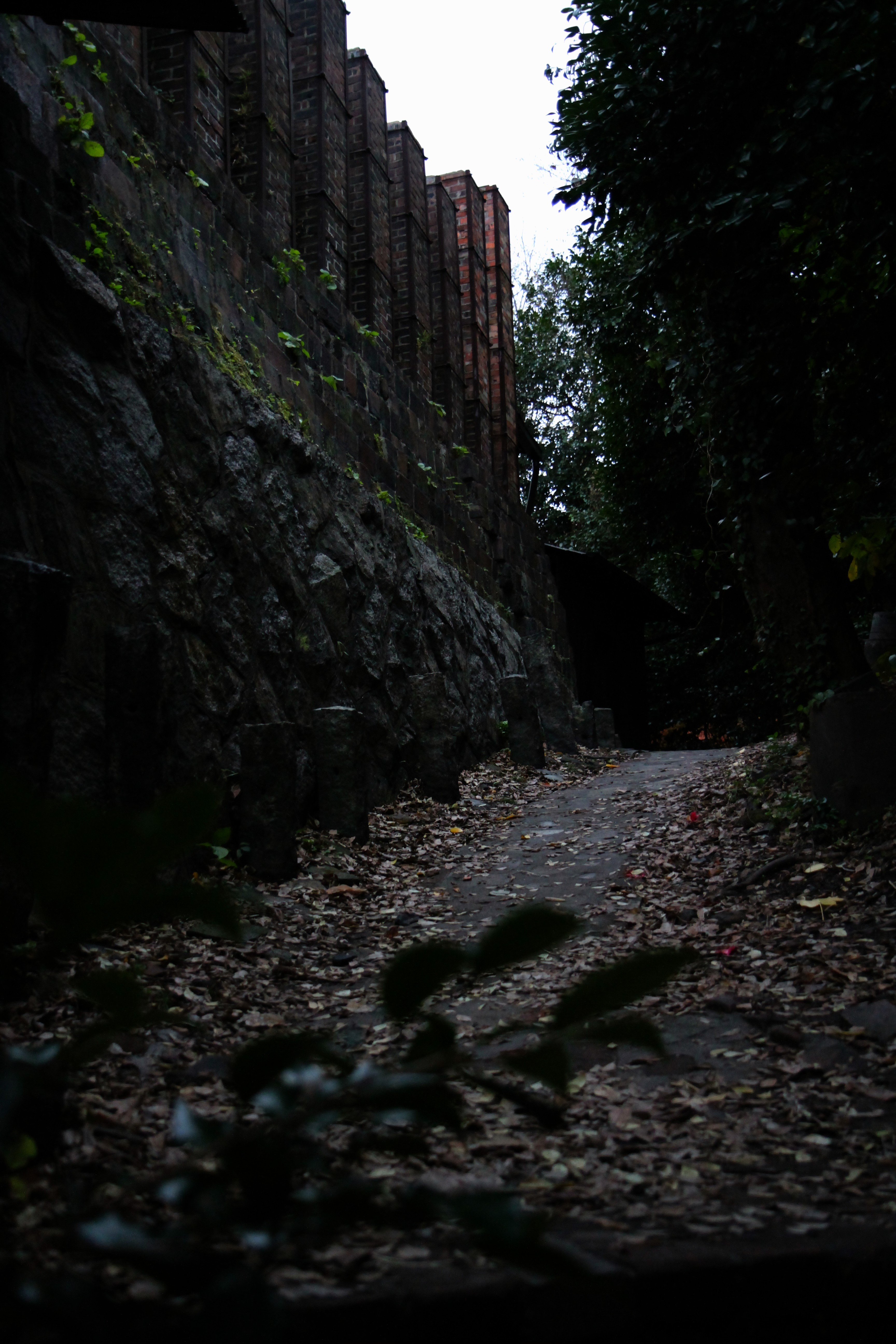
The Tōei kiln in Tokoname, Aichi, was built in 1887 and has eight firing chambers on a slope of approximately twenty degrees. The opening photograph illustrates a climbing kiln in Tokoname, not one in Bizen. Tokoname City, designated cultural properties
_-_panoramio_(2).jpg)
Before such a kiln, look beyond the weathered brick: notice the sequence of chambers, the positions of the stoking openings, and the ground over which workers moved. A place for firing pots was also a workplace where people carried wood, watched the fire, and judged changes in heat.
The significance of the climbing kiln lies in more than the evocative image of fire ascending. It transfers heat from one chamber to the next, connecting terrain, fuel, and labor. Understanding its structure reveals a much larger landscape behind a vessel small enough to hold in the hand.
Sources and Image Credits
- Dictionary definitions of noborigama supplied by the reader. The article's structure and wording are original.
- Bizen City, Bizen Ware Q&A 15. Other public-sector sources are linked in the relevant sections.
- Opening photograph: Gryffindor, Noborigama Tokoname 01, CC BY-SA 4.0. Original image used. Display framing and color may vary with the site's layout; those image presentations retain the same license. The second photograph is credited in its caption.

Sources checked September 28, 2026. Chamber counts, fuels, and firing durations vary between kilns; no single figure is presented as applying to every climbing kiln.