Japan / Ikeda Mitsumasa · Shizutani School · Okayama · Education
Ikeda Mitsumasa — The Lord Who Made Learning a Form of Government
Benevolent rule, flood recovery, public works, and education for commoners. Revisiting the ideals and authority behind the Former Shizutani School.
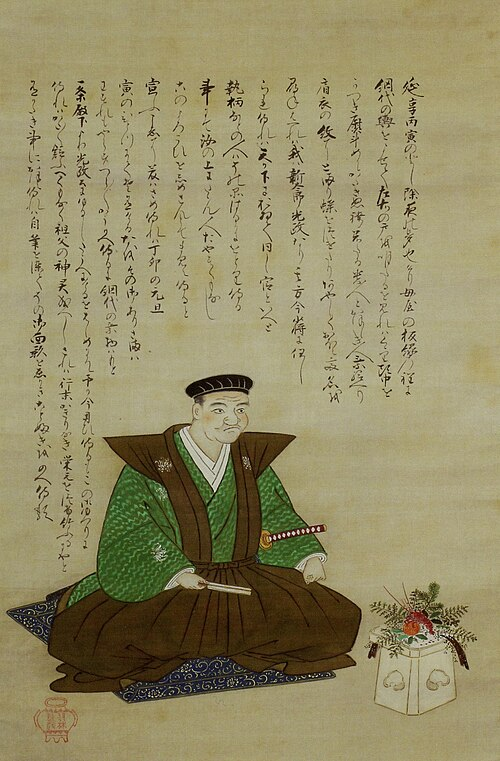
Ikeda Mitsumasa was one of the most prominent domain lords of early Edo-period Japan.
He established the foundations of Okayama domain government, studied Confucian thought, reformed agricultural and flood-control policy, and founded the Shizutani School for the education of common people. Later generations praised him as an exemplary ruler, while the austerity he encouraged became known as the “Bizen style.”
Yet Mitsumasa did not seek freedom and equality in their modern sense. He hoped to form people through learning—and to use learning to place society in order.
The quiet lecture hall of the Former Shizutani School preserves more than an educational ideal. It preserves the thought of a statesman for whom knowledge and government were inseparable.
A Child Who Became a Lord
Mitsumasa was born at Okayama Castle in 1609. His father was Ikeda Toshitaka; his mother, Tsuruko, was a daughter of Tokugawa Ieyasu’s influential retainer Sakakibara Yasumasa. As a child, he was called Yoshitaka.
When his father died in 1616, he inherited the 420,000-koku Himeji domain. He was only eight by the traditional count. The following year, the shogunate transferred him to the smaller Tottori domain on account of his youth.
A domain was not simply a lord’s private possession. It was granted, transferred, and sometimes confiscated by the Tokugawa government. Mitsumasa inherited power while still a child, but also learned that the power did not belong to him alone.
In 1632, at the age of twenty-four, he was transferred to Okayama. Even after handing the domain to his heir in 1672, he remained involved in government until his death in 1682. For roughly half a century, he directed the formation of Okayama’s political order.
What Should a Ruler Learn?
Mitsumasa sought the basis of government in learning.
He was not a Sengoku warrior who had conquered a territory by force. He was a lord charged with governing steadily inside an established Tokugawa order. For this task, he turned to Confucian thought.
He employed thinkers including Kumazawa Banzan and tried to connect a ruler’s morality to the lives of the governed. In Banzan’s thought, ordinary people were not merely objects of rule; they were the foundation of the country. A warrior’s duty was not simply to collect taxes, but to secure their livelihood.
Learning, however, was not for Mitsumasa merely an individual’s free pursuit of knowledge. It was to teach rulers just government, warriors their duties, and subjects their place in social order.
Education was at once a means of forming character and a technology of rule.
Reform Under the Pressure of Flood
In 1654, a major flood struck Okayama, placing both the population and the domain’s finances in danger.
The disaster became an occasion for Mitsumasa to reform the system by which retainers held and governed land. By concentrating authority under the lord, the domain sought more direct control over its population.
This was an application of “benevolent government,” but also a strengthening of the ruler’s power.
Ideals alone could not rescue households or restore agriculture. Rivers had to be controlled, irrigation and drainage built, and damaged land returned to cultivation. Mitsumasa’s government endured in memory partly because he appointed not only scholars, but people capable of turning policy into physical works.
Kumazawa Banzan and Tsuda Nagatada
Mitsumasa’s government cannot be understood without Kumazawa Banzan and Tsuda Nagatada.
Banzan taught him Confucian principles and benevolent rule. He was also a practical thinker concerned with society, political economy, and water management. But his appointment produced conflict within the domain. His learning and policies drew suspicion, and in 1657 he withdrew amid fears that controversy might threaten the domain’s standing with the shogunate.
Tsuda Nagatada, in turn, translated Mitsumasa’s designs into architecture and engineering. He directed new rice-field development, waterways, ports, cemeteries, and schools. He later participated in works including Kōrakuen and the reclamation of the Okinitta fields, helping shape the landscape and productive base of Okayama.
Mitsumasa provided direction; Nagatada made it durable. Their partnership joined political ideals to administration.
Toward a Domain in Which People Could Read
Mitsumasa’s educational policy was not limited to samurai.
In 1668, 123 elementary places of instruction were reportedly established across the domain. A domain academy followed in the castle town for the education of warriors.
In 1670, Mitsumasa ordered Nagatada to establish a school at Nobuhara in Kitani village, Wake district. The place was later renamed Shizutani. This was the beginning of the Shizutani School.
Its distinction lay in making the education of commoners a principal purpose at a time when domain academies generally served samurai families. Shizutani opened learning to both warriors and common people and sought to form individuals capable of supporting regional society.
The site describes itself as the world’s oldest surviving public school for commoners. “Public school” here should not be confused with modern compulsory education. It means an institution established and sustained by a feudal domain within a status-based society.
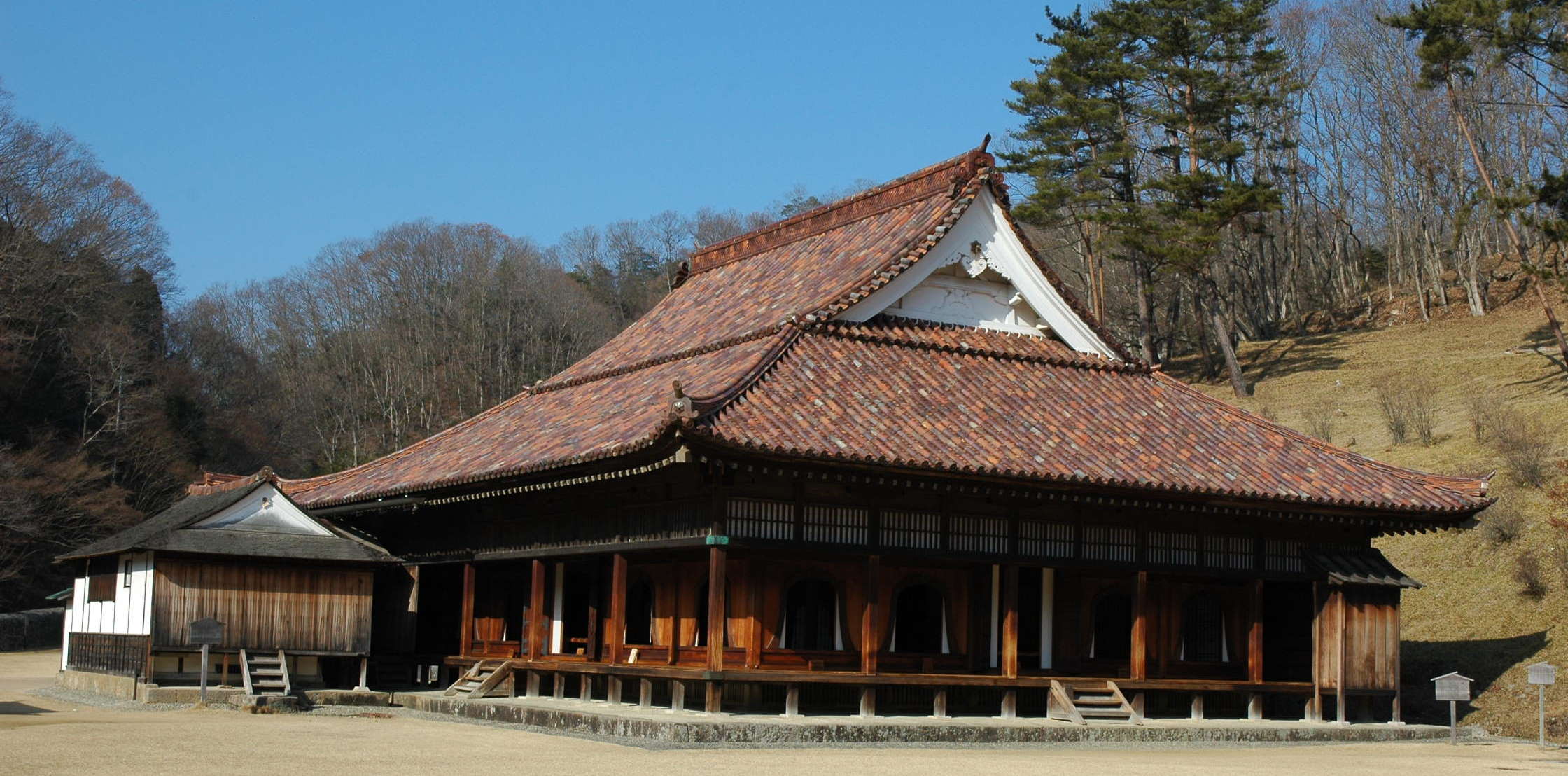

The School Mitsumasa Did Not Live to See Completed
Mitsumasa did not complete everything visitors see at Shizutani today.
He ordered its establishment in 1670. An early lecture hall was completed in 1673 and the first Confucian sanctuary the next year. Mitsumasa retired as lord in 1672 and died in 1682.
The present sanctuary was completed in 1684, and Hōretsushi—the shrine to Mitsumasa, now called Shizutani Shrine—in 1686. The present lecture hall, designated a National Treasure, was finished in 1701, nineteen years after his death.
Shizutani was therefore not a monument produced by one lord. Mitsumasa supplied the idea, Nagatada spent decades turning it into an institution and an architectural complex, and others completed the work after the founder’s death. Land and woodland were also secured to generate income for its maintenance.
Education does not endure because a building is erected once. It requires teachers, repairs, and resources for generations not yet born. Shizutani’s deeper innovation was to design education not as a temporary act of benevolence, but as an institution meant to outlive its founder.
Learning and Power
Mitsumasa is remembered as an exemplary ruler, but he also governed with strong authority.
In 1666, Okayama carried out a broad reorganization of Buddhist temples and Shinto shrines. Guided by Confucian rationalism, Mitsumasa regulated religious institutions through policies that differed in important ways from the shogunate’s general approach.
Religion and education were not private matters in his political thought. They were parts of the order of the domain. Encouraging learning and disseminating approved values were not separate undertakings.
Here lies the double character of his rule. He placed the people’s livelihood at the foundation of politics and expanded opportunities for commoners to learn. At the same time, the ruler defined desirable conduct and belief and sought to lead the population toward them.
His government was enlightened and authoritarian at once. The label “wise lord” conceals this tension unless it is examined carefully.
Austerity as Political Ethics
Mitsumasa valued economy and restraint. The way of life he promoted became known as the “Bizen style.”
It was more than a method of saving money. A ruler who avoided luxury and disciplined himself could claim moral legitimacy. Yet when the same austerity was imposed uniformly upon retainers and subjects, it also became a form of control. The border between the ruler’s ethics and a command to society was never clear.
Mitsumasa treated politics not only as technique, but as a problem of character and morality. A good society, he believed, required more than new institutions. Both those who governed and those who lived under government had to be educated.
Beyond the “Wise Lord”
Mitsumasa died in 1682 and was buried according to Confucian rites at the Ikeda family cemetery in Waidani, now part of Yoshinaga in Bizen City. At Shizutani, a shrine was built for him and a gilt-bronze seated image installed.
His greatest legacy is not simply a beautiful school.
For whom does education exist? How responsible should government be for daily life? Does knowledge make people free, or place society in order? What enables an ideal to become an institution that survives its founder?
Mitsumasa was not a modern democrat. He was a feudal lord governing a status society, and his reforms were tied to the concentration of domain power. Yet he did not locate the strength of his territory only in castles and weapons. He located it in people’s capacity to learn.
Building a school in a quiet mountain valley suggested that the center of government did not exist only inside the castle. A place where people learned to read, understand their world, and transmit knowledge could also become a center from which a country was made.
When Ikeda Mitsumasa made learning a form of government, education became an instrument of rule. Yet the school survived him and accepted new meanings of learning in later eras. An institution created by power lived beyond the intentions of the man who founded it.
Sources and Image Credits
- Bizen City, history of the Former Shizutani School
- Bizen City, Former Shizutani School
- Bizen City e-Bizen Museum, Ikeda Mitsumasa
- Official Former Shizutani School site, historic-site overview
- Okayama City, site of Tsuda Nagatada's residence
- Okayama Tourism Federation, Waidani Ikeda family cemetery
- Entries on Ikeda Mitsumasa in Encyclopedia Nipponica and the Heibonsha World Encyclopedia, accessed through reference material supplied by the user.
- Lead image: portrait of Ikeda Mitsumasa by Ikeda Tsugumasa. Hayashibara Museum of Art, Wikimedia Commons, public domain.
