Arts / Bizen ware · Ceramics · Craft · Okayama
What Is Bizen Ware? A Guide to Its Foundations and Forms
An introduction to the history, techniques, kiln effects, everyday forms, selection, and care of the unglazed pottery shaped by Bizen clay and fire.
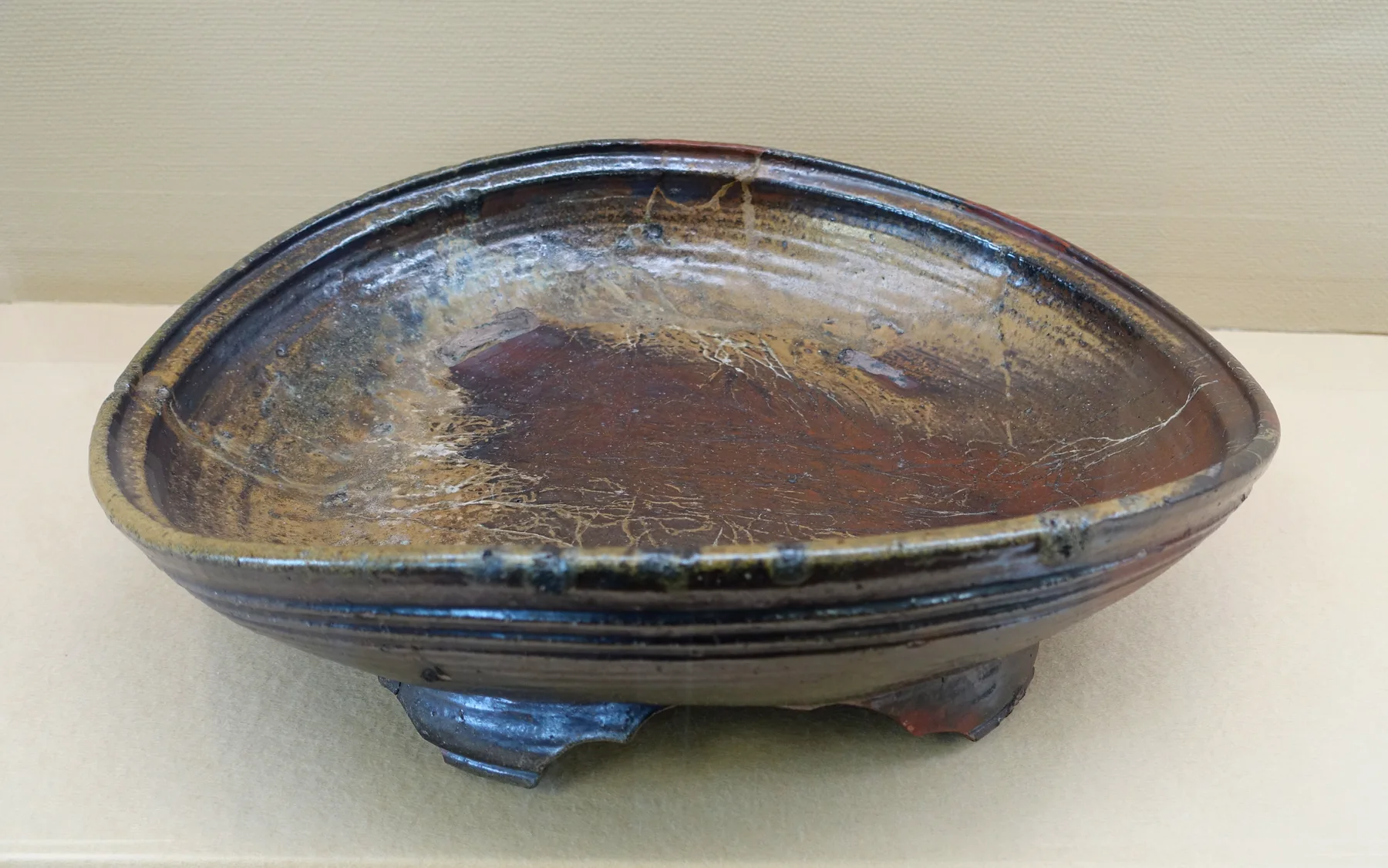
Bizen ware is a form of pottery produced primarily around Inbe in Bizen City, Okayama Prefecture. It is one of Japan’s representative traditional ceramics and is generally counted among the Six Ancient Kilns of Japan.
Its defining characteristic is that, as a rule, neither painted decoration nor artificially applied glaze is used. Instead, the character of each vessel emerges from the interaction of clay and fire.
Finished pieces display subdued shades of brown, reddish brown, black, and gray. Even vessels fired in the same kiln differ according to where the wood ash falls, how the flames move, and where each piece is placed. For this reason, no two pieces of Bizen ware have exactly the same keshiki, or “landscape.”
A Brief History of Bizen Ware
Bizen ware has a long history. Its beginnings are generally dated to the late Heian or early Kamakura period. It developed through the production of practical objects such as jars, large storage vessels, and grinding bowls, and by the Muromachi period it circulated widely as durable, functional pottery.
In the Momoyama period, tea practitioners came to value its rustic character, and Bizen vessels began to be used as tea utensils. With little added ornament and surfaces that reveal the qualities of the clay itself, Bizen ware harmonized naturally with the aesthetics of wabi tea.
The tradition later experienced periods of decline as demand changed. In modern times, however, the work of individual potters brought it renewed attention. Today Bizen ware ranges from household objects, tea utensils, flower vessels, and sake ware to works conceived as contemporary art.

Pottery Without Applied Glaze
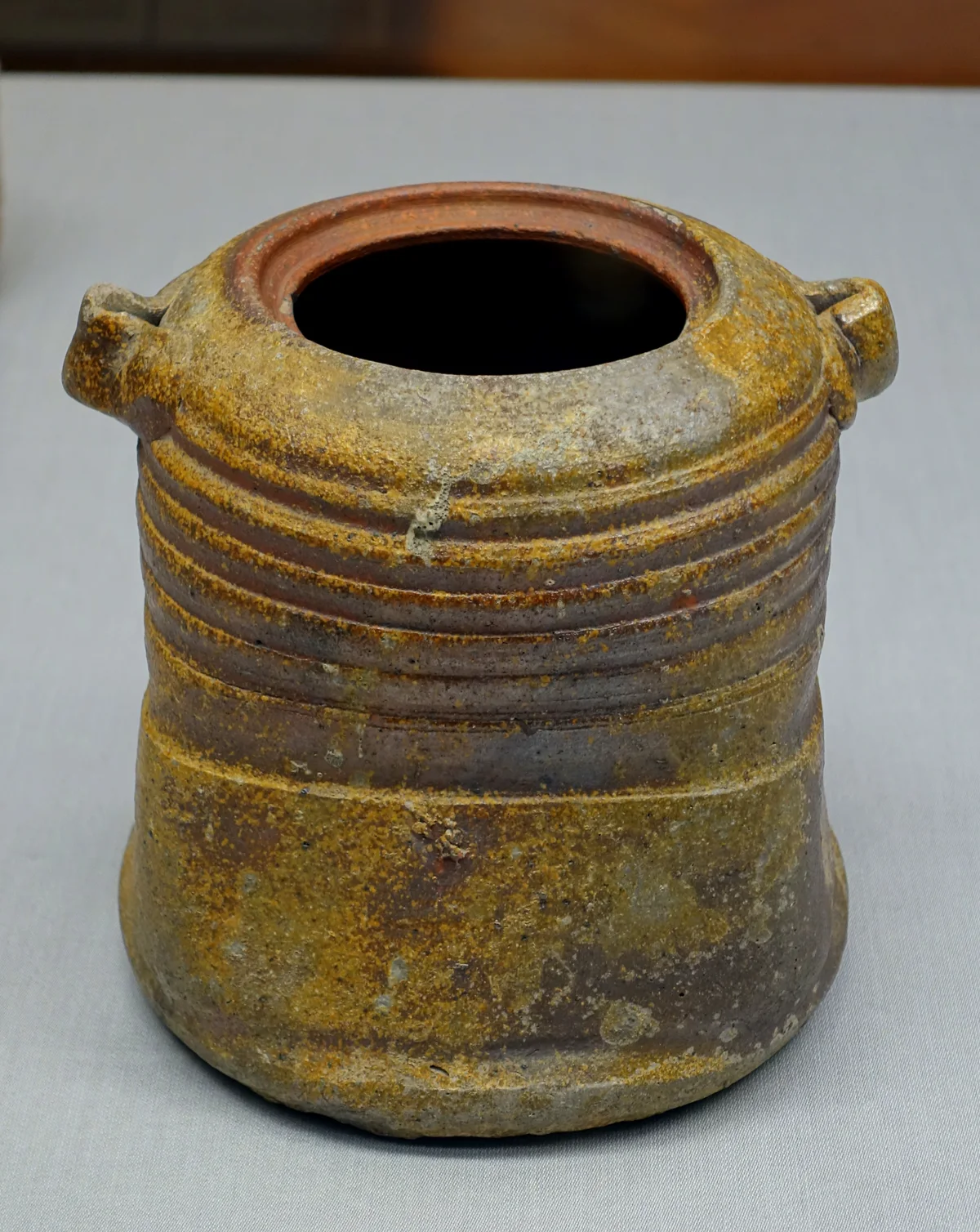
In many ceramic traditions, glaze is applied to the surface of a vessel. When fired, glaze becomes glasslike. It can add color and luster while also reducing water absorption.
Bizen ware, by contrast, is normally made without artificially formulated glaze. Painted decoration is also generally omitted. The shaped clay is placed in a kiln and fired with wood for an extended period until the body is thoroughly vitrified and hardened.
Glasslike areas may nevertheless appear on the surface. These are produced when wood ash settles on a vessel and reacts with the clay at high temperature, forming what is known as a natural ash glaze. Rather than being brushed on by a person, it develops in the kiln with an element of chance.
Clay and Firing
Bizen ware has traditionally used clay obtained around Inbe. One representative material is ta-tsuchi, or “rice-field clay,” dug from layers beneath local paddies. It is fine and plastic, although its properties vary according to where it is extracted.
Potters may blend different clays or allow them to age for long periods before preparing them for a particular work. Bizen ware is not created simply by digging local clay and firing it. Experience and skill are also required to judge the material and bring it into a workable condition.
Once shaped, the pieces are packed into a kiln and fired with wood over a long period. The temperature and duration vary according to the kiln and the work, but a firing can continue for more than ten days.
Throughout that time, potters feed the fire and monitor the heat and flames. Yet the interior of the kiln can never be controlled completely. The distinctive landscapes of Bizen ware emerge where human intention meets natural phenomena.
The Characteristic Landscapes of Bizen Ware
The colors and patterns created inside the kiln are appreciated as keshiki—literally, “landscapes.” The following are among the best-known examples.
Goma
When wood ash settles on a vessel, it may form yellow or yellow-brown speckles and flowing patterns. This effect is called goma, meaning “sesame,” because it can resemble scattered sesame seeds.
If enough ash accumulates, it may melt into a thick natural glaze. Goma is one of the visual signatures of Bizen ware.
Hidasuki
Hidasuki, or “scarlet cord,” appears as red or vermilion lines crossing the surface like a sash. It originated when straw used to prevent pieces from sticking together in the kiln reacted with iron and other components in the clay.
Because the red lines cross a pale earthen surface, hidasuki can appear comparatively bright and decorative. Today potters may arrange straw deliberately to create the effect.
Botan-mochi
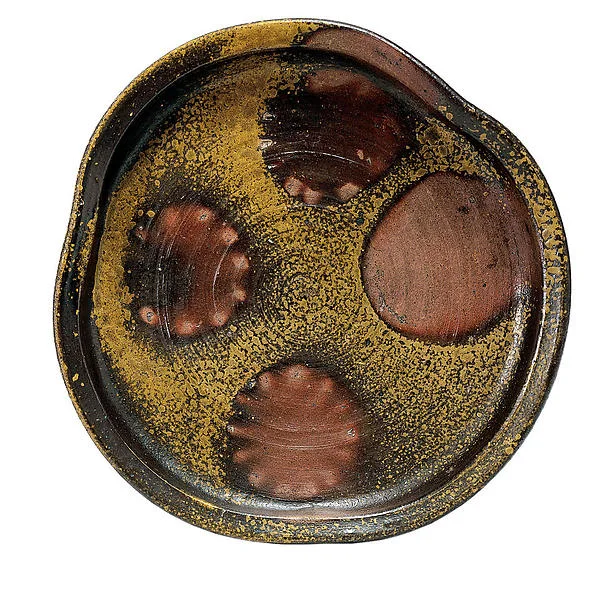
When small vessels or pieces of refractory material are placed on dishes and bowls during firing, the covered areas receive less direct flame and ash. Circular marks may remain as a result. These are called botan-mochi.
The name comes from their resemblance to round rice cakes. It is an example of the practical method of stacking a kiln load becoming a form of decoration in its own right.
_with_Circular_Patterns_(Botan-mochi)_MET_2015_300_264_Burke_website.jpg)
Sangiri
When a vessel becomes buried in ash or charcoal and is fired in an oxygen-poor area of the kiln, gray, blue-gray, or black coloration may develop. This effect is known as sangiri.
Its strong contrast with the surrounding brown surface can produce a complex and powerful landscape.
Fuse-yaki
Firing vessels face down or stacking them with other pieces changes how flame and ash reach their surfaces. The boundaries between exposed and protected areas remain as shifts in color and pattern.
In Bizen ware, the direction in which a piece faces and the objects placed beside it are themselves important means of expression.
Bizen Ware in Concrete Forms
Teacups
A teacup is one of the easiest ways to bring Bizen ware into daily life. It lacks the brilliant colors produced by conventional glazes, but it allows the user to feel the clay particles and firing variations directly in the hand.
Even two cups of the same shape may differ: one may display goma, while another carries hidasuki. A buyer can compare not only their forms but also their landscapes and textures.
Beer Mugs
Beer mugs are also popular in contemporary Bizen ware. Their appeal lies in their solid, rustic appearance and surfaces that retain the texture of the clay.
They are often said to produce finer beer foam, although the result also depends on the condition of the vessel’s surface and the way the beer is poured. Rather than making categorical claims about function, it is better to enjoy the mug’s texture, weight, and feel at the lip as well.
Tokkuri and Guinomi
Sake vessels are another representative category. Because tokkuri flasks and guinomi cups are small, they offer an intimate way to appreciate the clay body and effects such as goma and hidasuki.
Differences among individual potters are especially visible in guinomi, making them suitable first pieces for someone beginning a Bizen ware collection.
Flower Vessels
Bizen flower vessels pair well with wildflowers and branches. The subdued color of the pottery brings the plant forward, while the texture of the clay connects naturally with the vitality of the living material.
Forms range from small vases for a single flower to large vessels intended for the tokonoma alcove. Before adding water, it is wise to confirm whether the piece is susceptible to leakage or staining.
Grinding Bowls and Storage Jars
Bizen ware did not begin as an art made primarily for viewing. It developed from practical objects that supported daily life. Grinding bowls and storage jars are therefore important examples for understanding its history.
Durability and usability mattered more than elaborate decoration. The simple, forceful forms of Bizen ware still carry this utilitarian heritage.
What to Look for When Choosing a Piece
If you are buying Bizen ware for the first time, begin by deciding how you intend to use it. Teacups, rice bowls, drinking cups, and small plates are easy choices for daily use.
Next, consider form and weight. A piece may look appealing but feel too heavy in the hand, or its rim may be thicker than you prefer. Whenever possible, handle the piece before choosing it.
There is no need to judge a landscape solely by its name or rarity. Some vessels carry abundant goma; others have vivid hidasuki, dark firing effects, or quiet clay surfaces. Each has its own character. What matters is choosing something you will want to look at and use for years.
If the piece will be used for food or drink, ask the seller or potter whether it is suitable for that purpose. An object made as a work of art is not necessarily intended as tableware.
First Use and Care
Care requirements vary from one work to another, so the basic rule is to follow the instructions provided by the potter or seller.
In general, wash the vessel with water before first use and let it dry thoroughly. For serving dishes, soaking the piece in water before use can help limit the absorption of oil and strongly colored liquids.
Wash the vessel promptly after use and allow it to dry completely. Storing an absorbent piece while it remains damp may cause odors or mold. Compatibility with dishwashers and microwave ovens differs from one work to another and should not be assumed.
A rough surface may scratch a table or other dishes. Check the foot of the vessel and use a cloth or mat underneath when necessary.
The Essence of Bizen Ware
The appeal of Bizen ware does not lie simply in the fact that it is unglazed.
Local clay is selected, shaped, positioned in the kiln, and fired with wood over a long period. Human judgments accumulate at every stage. At the same time, no potter can completely command the movement of flame or the fall of ash.
Bizen ware is born from both what people design precisely and what they leave to nature.
Landscapes such as goma, hidasuki, botan-mochi, and sangiri are not merely surface decorations. Each is a trace of how a vessel encountered flame and ash inside the kiln.
To look at Bizen ware is therefore not only to look at a finished object. It is also to read the clay, wood, fire, time, and human decisions behind it. Once we understand how it is made, even a surface that first appears plain begins to reveal a rich field of change.
Sources and Image Credits
- Bizen City: History and Varied Kiln Effects of Bizen Ware
- Okayama Prefecture: Bizen Ware, a Nationally Designated Traditional Craft
- Agency for Cultural Affairs, Japan Heritage: The Six Ancient Kilns
- Japan Kogei Association: Bizen Ware Technique
- Okayama Prefecture Bizen Ware Pottery Association: How to Use Bizen Ware
- Lead image: Bizen ware dish, Momoyama period, Hakone Museum of Art. Photograph by Daderot, Wikimedia Commons, CC0 1.0. Resized for the web.
