Japan / Okayama · History · Craft · Power
Hideyoshi, Bizen, and the Speed of Ambition
Bizen ware, a flooded castle, and the ten-day march that turned a man of uncertain origins into Japan’s next ruler.
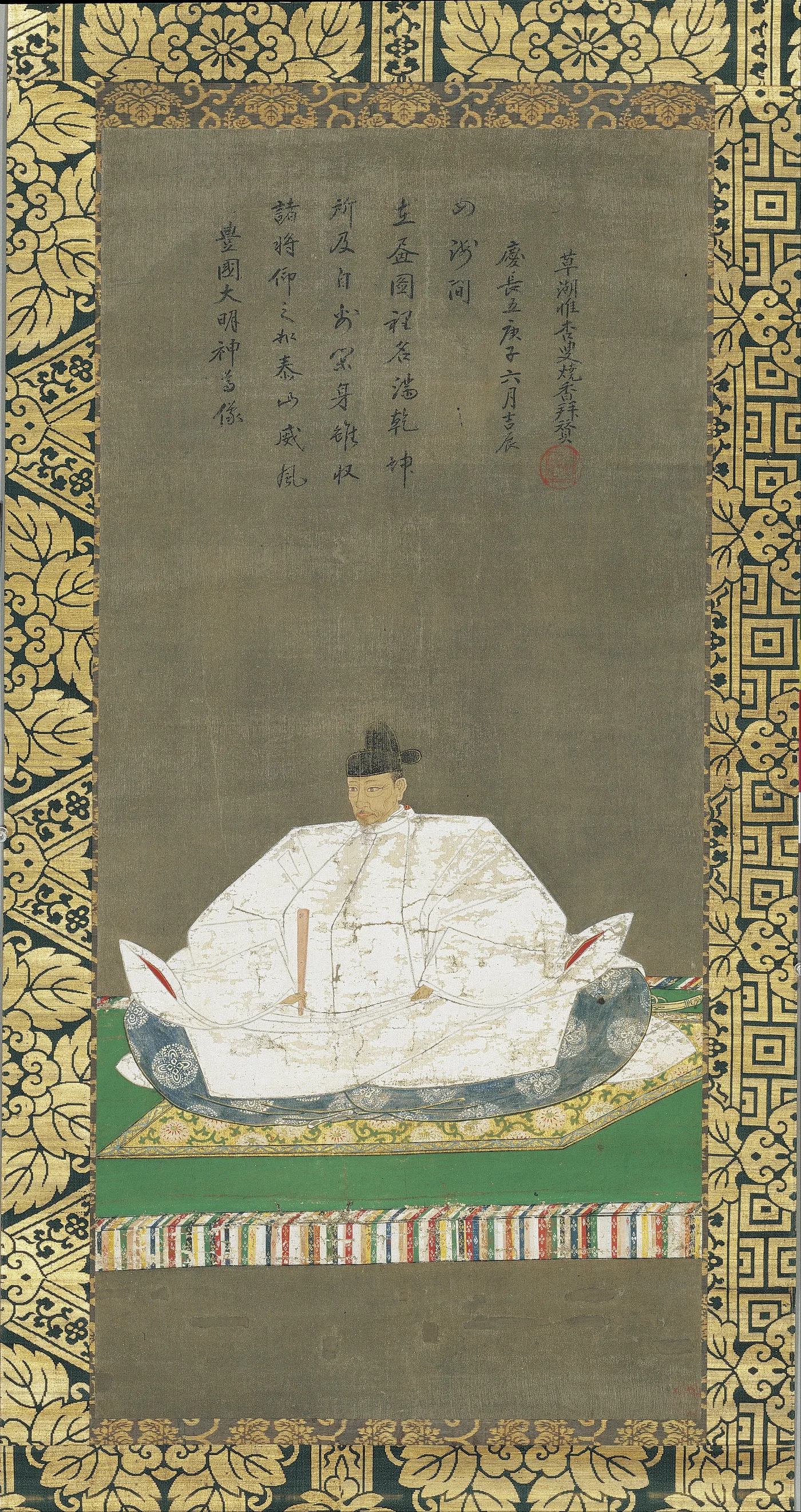
Toyotomi Hideyoshi is one of the best-known soldiers and statesmen in Japanese history. Less familiar, even within Japan, is the depth of his connection to Bizen—the eastern Okayama region whose name survives today in Bizen City and in the unglazed stoneware known as Bizen ware.
In 1582, while campaigning in western Japan, Hideyoshi passed through Inbe, the heart of Bizen pottery production. A local account records that he issued a placard protecting the settlement from misconduct by his troops. At the end of his life, his remains are also said to have been placed in a large Bizen jar and interred at the Hōkoku mausoleum in Kyoto. It is safer to describe this as a historical account than as a personal instruction from Hideyoshi: no reliable evidence has been found that he himself ordered the unusual burial.
Clay, fire, and political taste
Bizen ware was valued first for utility. Its jars, storage vessels, and grinding bowls were hard-fired, durable objects made for daily life. Long before they became museum pieces, they moved through kitchens, markets, storehouses, temples, and castles across western Japan.
The transformation of Bizen into an esteemed tea ceramic did not begin with Hideyoshi alone. Bizen vessels were already being reconsidered within tea culture in the late fifteenth century. During the late Muromachi and Momoyama periods, however, tea masters increasingly selected Bizen flower vases, water jars, and waste-water vessels for the tea room. Hideyoshi’s patronage of tea, together with the influence of figures such as Sen no Rikyū, helped expand that recognition.
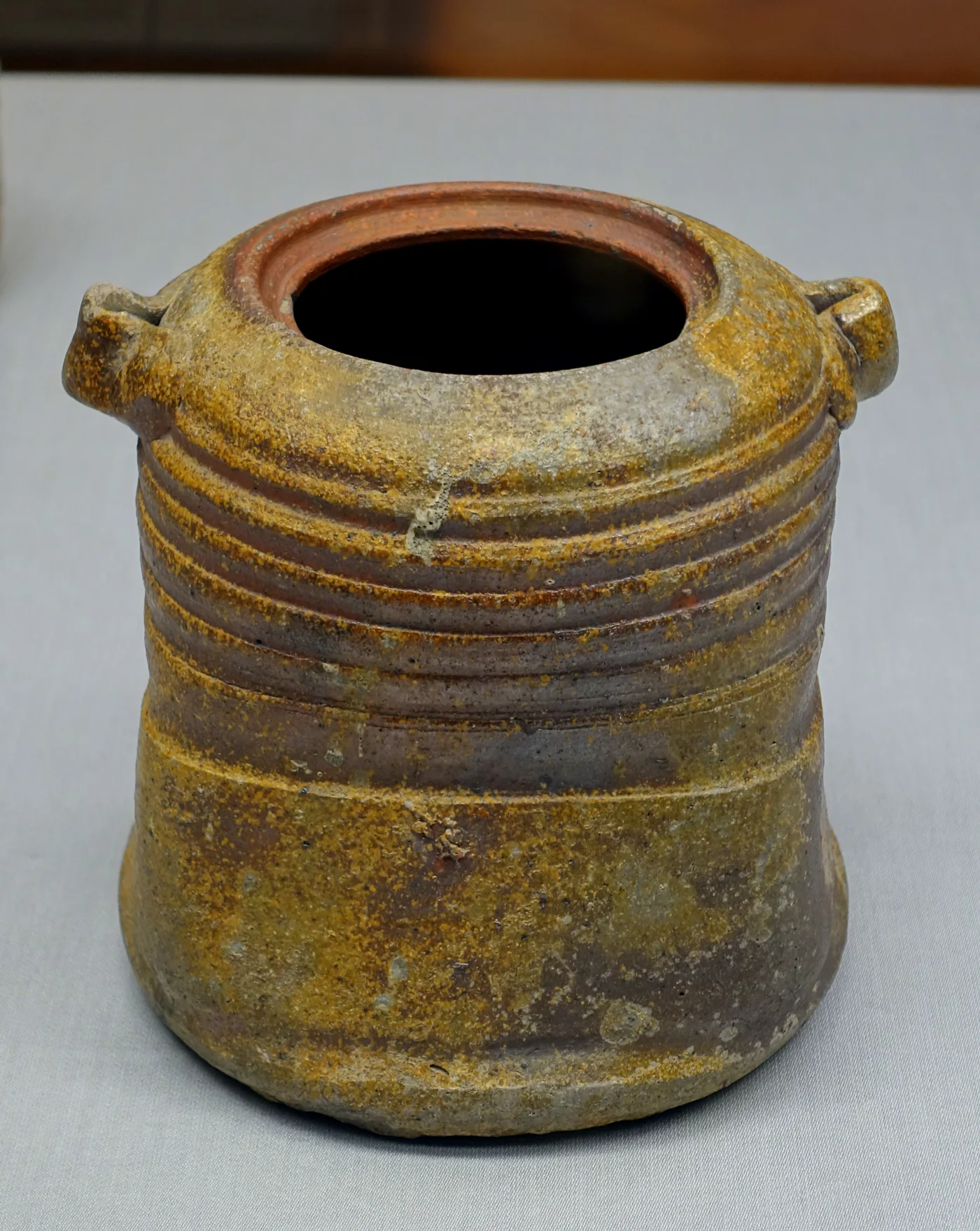

This distinction matters. Hideyoshi did not single-handedly turn a humble household product into high art. Rather, he stood at the center of a political and cultural world in which objects once regarded as ordinary acquired new meanings. His attention helped make Bizen part of the visual language of power, hospitality, and cultivated taste.
Who was Hideyoshi?
Hideyoshi is a household name in Japan, but he remains much less familiar abroad. Seen from the present, his life is remarkable: a man of uncertain and apparently modest origins rose through military service and eventually became the country’s dominant ruler.
The familiar story calls him a farmer’s son. The evidence is not so clear. Reliable contemporary records say little about his early life, and historians have proposed connections to farmers, foot soldiers, craftsmen, merchants, and other groups. It is therefore more accurate to say that he came from a comparatively low-status background than to describe him simply as a member of Japan’s “lowest class.”
His rise was made possible in part by the age into which he was born. The Warring States period created openings for advancement through military achievement, administration, negotiation, and personal allegiance. Yet it was not a modern meritocracy. Birth, family connections, armed strength, patronage, and luck continued to matter enormously.
Hideyoshi also found an unusually receptive lord in Oda Nobunaga, who could reward ability when it served his ambitions. Even within those favorable circumstances, Hideyoshi’s ascent was exceptional. He possessed an acute sense of timing: the ability to recognize an opening, act before his rivals, and turn an immediate success into a larger political advantage.
Hideyoshi’s defining talent may not have been speed alone, but knowing exactly when speed could change the meaning of events.
The flooded castle and the return east
The event that most clearly reveals this instinct is the Chūgoku Return—the rapid movement of Hideyoshi’s army from western Japan toward Kyoto after the death of Nobunaga.
In the spring of 1582, Hideyoshi was fighting the Mōri in the Chūgoku region on Nobunaga’s behalf. His forces surrounded Bitchū Takamatsu Castle, in what is now Kita Ward, Okayama City. The low-lying fortress was enclosed by an embankment, and water was diverted around it, producing one of the most famous siege landscapes in Japanese history.
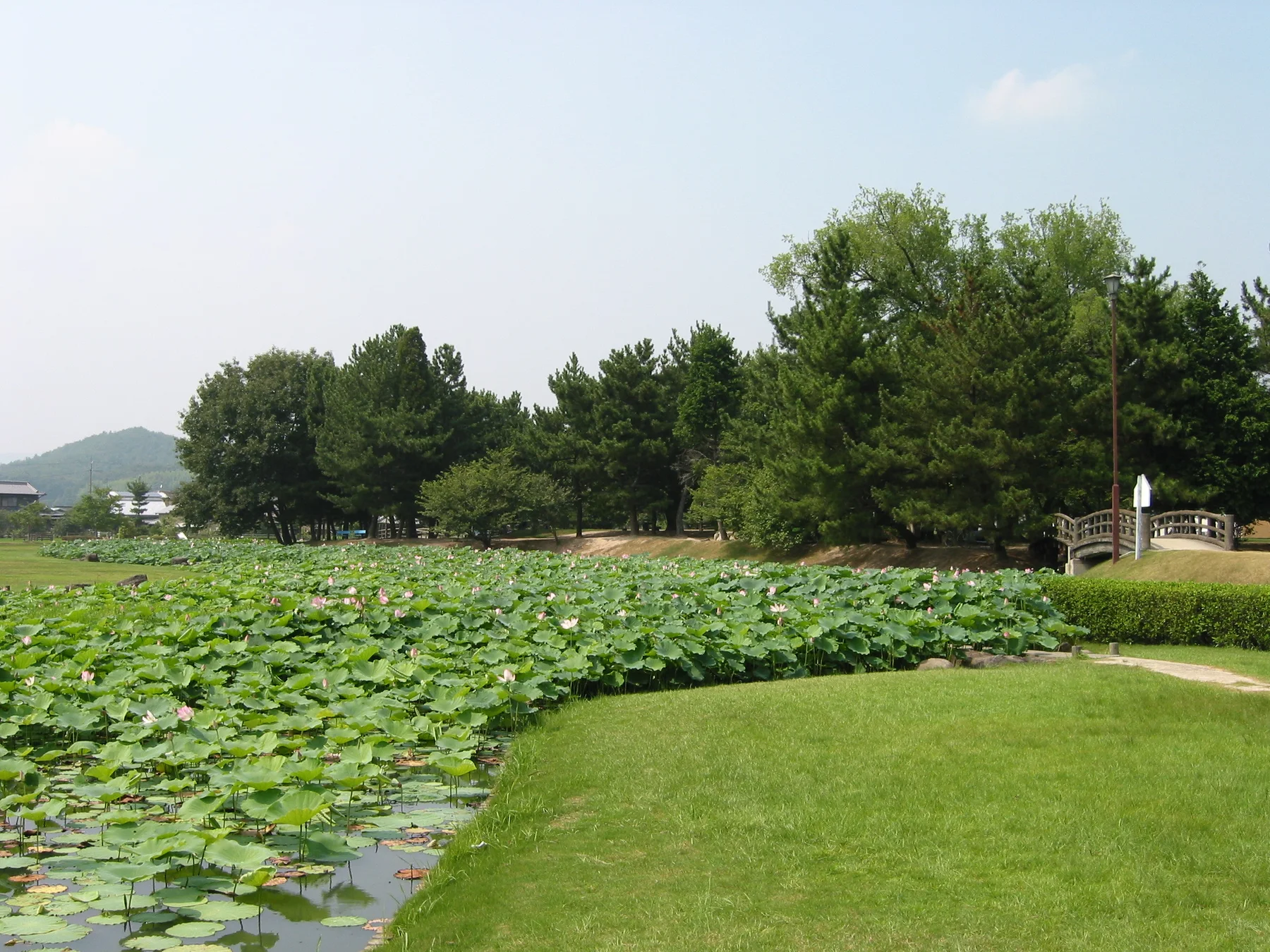

During the siege, Hideyoshi learned that Nobunaga had been attacked at Honnō-ji in Kyoto by Akechi Mitsuhide and had died. Hideyoshi quickly concluded peace with the Mōri, disengaged his army, and turned east.
- Bitchū Takamatsu
A rapid settlement with the Mōri ended the siege. - Himeji
The returning army regrouped and prepared to advance. - Yamazaki
Hideyoshi defeated Akechi Mitsuhide’s forces.
The journey from Bitchū Takamatsu to Yamazaki covered roughly 230 kilometres and is traditionally described as having taken about ten days. Precise routes and timings remain subjects of debate, but the strategic result is not in doubt. Hideyoshi brought a major army back to the capital region before his rivals could take control of the crisis.
At the Battle of Yamazaki, his forces defeated Mitsuhide’s. Hideyoshi did not personally “strike Mitsuhide down”: Mitsuhide died while fleeing the defeat, according to accounts that differ in their details. The victory nevertheless allowed Hideyoshi to present himself as Nobunaga’s avenger and placed him at the center of the struggle over the Oda succession.
A Japanese Rubicon
The moment can be compared—carefully—to Julius Caesar’s crossing of the Rubicon. Both episodes became symbols of a point after which the political world could not return to its previous form.
The situations were not the same. Caesar knowingly crossed a boundary that threatened civil war in Rome. Hideyoshi was returning to confront the man who had overthrown his lord. Nor can we know that Caesar hesitated while Hideyoshi did not; the inner lives of both men have been shaped by later storytelling.
What the record does show is that Hideyoshi responded with extraordinary speed. He concluded a difficult settlement, redirected an army over a great distance, defeated Mitsuhide, and converted military success into political legitimacy.
The same instinct appears in his relationship with Bizen. He encountered the region not as a distant connoisseur but along the roads, supply lines, castles, and workshops of western Japan. Bizen ware joined daily utility to ceremonial value; Bitchū Takamatsu joined provincial geography to a national transfer of power. In both, the local and the political met.
Hideyoshi’s rise should not be reduced to a simple fable of talent defeating birth. War opened possibilities, but it also produced suffering; advancement depended on armies, alliances, coercion, and fortune as well as ability. Even so, his life remains an exceptional study in timing. From the clay of Bizen to the road east from Takamatsu, his story repeatedly turns on the same question: who can see the opening first, and who can move before it closes?
Sources and image credits
- Bizen City: The Development of Bizen Ware (4/7) — Hideyoshi, Inbe, tea utensils, and the account of the burial jar.
- Agency for Cultural Affairs: Bizen Ware — the development of Bizen from utilitarian vessels to Momoyama tea ceramics.
- Teikyo University Museum — the uncertainty surrounding Hideyoshi’s origins.
- Okayama City: Bitchū Takamatsu Castle — the siege, the Honnō-ji Incident, and the Chūgoku Return.
- Kyoto City: The Memorial to Akechi Mitsuhide — the Battle of Yamazaki and accounts of Mitsuhide’s death.
- Lead image: Portrait of Toyotomi Hideyoshi, artist unknown, c. 1600, public domain.
