Japan / Okayama · History · Place · Education
How Okayama Was Made
From a Fujiwara estate to the Ukita castle town and Ikeda Mitsumasa's schools, three eras that shaped Okayama.
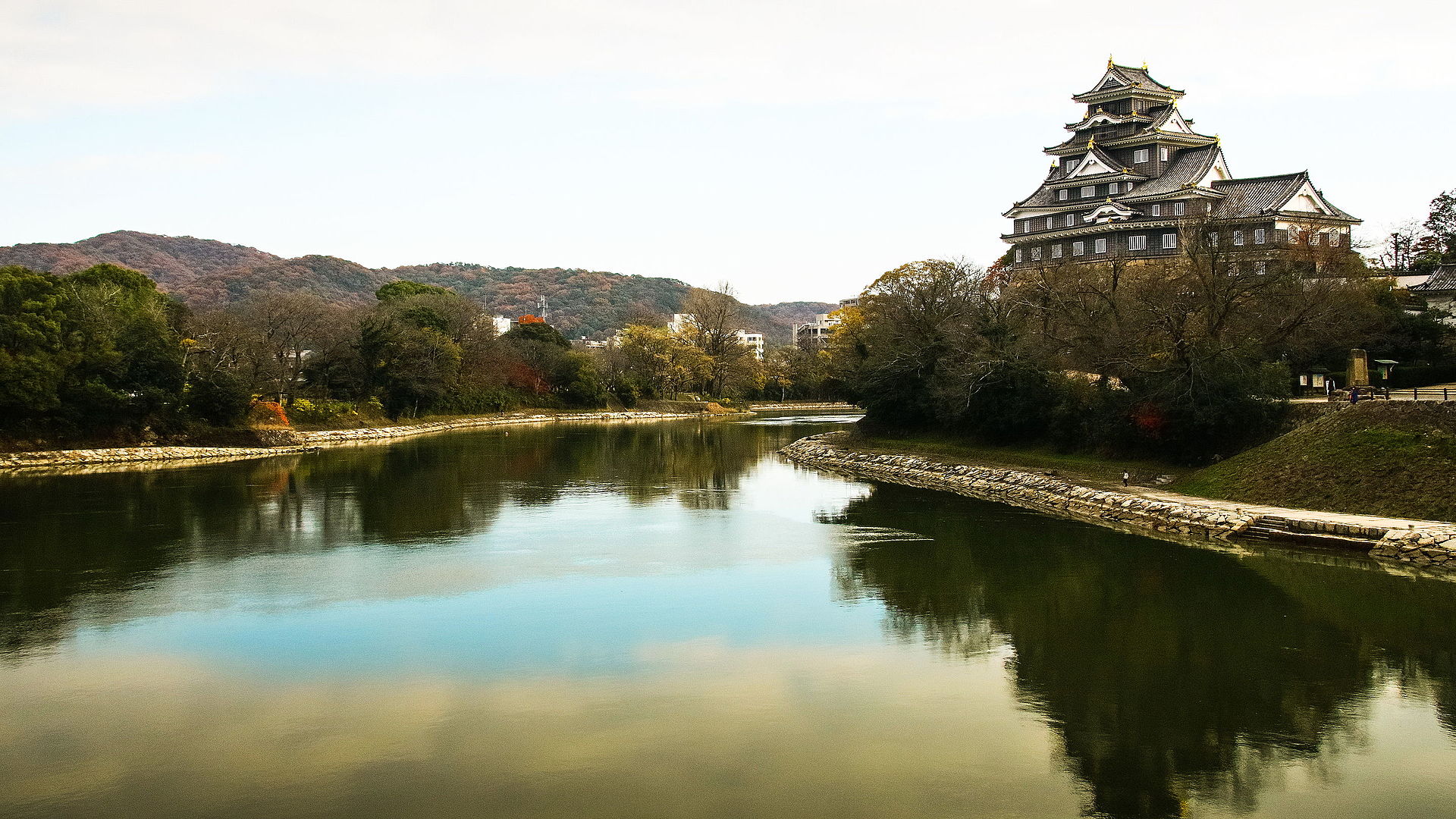
Bizen City belongs to Okayama Prefecture.
Let us look more closely at Okayama itself. Through people who played important roles in the Heian, Sengoku, and Edo periods, we can trace how the region developed over time.
The Heian Period: The Fujiwara and the Shikata Estate
During the Heian period, an estate belonging to the Fujiwara clan occupied part of what is now southern Okayama City. Known as Shikata-shō, it is thought to have extended from the present-day Ōtomohonmachi and Ōtomo districts through Seikibashi and the area around Okayama University’s Shikata Campus.
Shikata was one of the denka watari-ryō, the powerful estates inherited by successive heads of the Fujiwara house. Its position midway along the Seto Inland Sea and its value as a center of water transport probably helped make it an important holding.
The Fujiwara may reasonably be called the most powerful aristocratic family in Japanese history.
Their founding ancestor was Nakatomi no Kamatari, later known as Fujiwara no Kamatari. Together with Prince Naka no Ōe—the future Emperor Tenji—Kamatari overthrew Soga no Iruka, a central figure in the Soga clan, and helped lead the political changes later known as the Taika Reform.
The Taika Reform is one of the best-known programs of political change in Japanese history. Put simply, it sought to replace a society in which powerful regional clans controlled their own lands and people with a more centralized state organized around the emperor.
There is a limited resemblance to the absolute monarchy that reached its height under Louis XIV in France, but the two cannot be treated as equivalent.
French absolutism represented the culmination of centralization pursued over several generations. Before the Taika Reform, by contrast, Japan’s great clans still possessed extensive independent power. The reformers attempted to bring their lands and populations within a state centered on the imperial court.
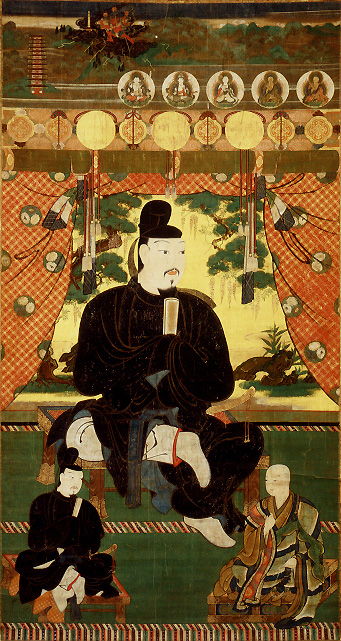
Emperor Tenji granted Kamatari the name Fujiwara. His descendants would produce generations of regents and chief advisers, eventually occupying the center of court politics.
Shikata was one of the important estates inherited by the heads of that family. From an early period, the land around Okayama was tied both to Seto Inland Sea commerce and to the political power of the capital.
The Sengoku Period: Ukita Naoie and the Castle Town
By the end of the medieval period, settlements connected with ports and markets had formed in what is now central Okayama City. Yet Okayama began to take shape as the castle town recognizable today under the Ukita clan.
The Ukita had originally served the Urakami, powerful lords of Bizen Province. Through warfare, diplomacy, and intrigue, Ukita Naoie enlarged his power, broke with his former lord, and emerged as a Sengoku daimyo controlling most of Bizen and Mimasaka.
War chronicles describe the Ukita house as having fallen into decline and Naoie as enduring a difficult youth. Such stories must be treated cautiously as historical evidence, but his rise undoubtedly required extraordinary persistence.
Around 1573, Naoie moved his base to Okayama Castle. By settling retainers nearby and drawing merchants and artisans into the town, he laid the foundations of the Okayama castle town.
His son, Ukita Hideie, developed the project on a far larger scale.
From around 1591, Hideie began constructing the great castle that became the basis of present-day Okayama Castle. He altered the course of the Asahi River, directed the western highway—the old San’yō route—through the town, and concentrated warriors, merchants, and craftspeople around the castle. The keep was completed in 1597, by which time the castle and town had largely taken shape.
Hideie also conducted land surveys and promoted the development of new fields.
The land around modern Okayama City is notably flat. Its base is an alluvial plain formed by sediment carried by the Asahi and other rivers. New-field development and land reclamation then continued through both the Ukita and Ikeda eras. Hideie did not create the entire plain himself, but his castle building, river works, and agricultural development were decisive steps in transforming Okayama into a major city.
Naoie’s story is full of dramatic turns. Yet his son Hideie is more widely remembered today. Hideie’s life unfolded on a still larger stage and carried him between the extremes of glory and ruin.
Ukita Hideie: Glory and Exile
Hideie’s childhood name was Hachirō. The first character of the name Hideie is said to have been bestowed by Toyotomi Hideyoshi. His life would remain closely bound to Hideyoshi’s fortunes.
Hideie succeeded his father at around the age of ten. The Ukita were then caught in conflict with the Mōri, and their future was far from secure.
The balance shifted when Hashiba Hideyoshi—the future Toyotomi Hideyoshi—advanced into western Japan to fight the Mōri. A man of exceptional political and military ability, Hideyoshi would eventually unify the country. His support became the source of Hideie’s spectacular rise and, ultimately, of his fall.
After unification, Hideie became a great daimyo ruling Bizen, Mimasaka, and part of Harima. He was appointed one of the Five Elders, the council of powerful lords at the highest level of the Toyotomi regime. Tokugawa Ieyasu was another of its members.
Naoie had already established great power across Bizen and Mimasaka, but under Hideyoshi his son expanded both his territory and his political position. It was an extraordinary ascent.
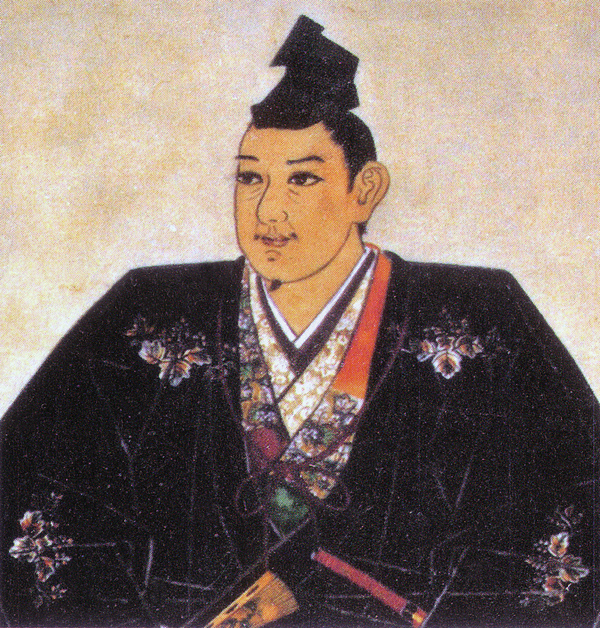
After Hideyoshi’s death, however, Hideie’s position rapidly became precarious.
At the Battle of Sekigahara—the conflict that opened the way from Toyotomi to Tokugawa rule—Hideie fought as one of the principal commanders of the Western Army against Ieyasu’s Eastern Army.
The Western Army lost, and Hideie’s lands were confiscated. He escaped to Satsuma but was eventually handed over to the Tokugawa authorities and exiled to Hachijōjima in 1606, while still in his early thirties.
Life on the island was far from prosperous. Hideie died there in 1655 at the age of eighty-three, having spent nearly half a century in exile. His was a life of extraordinary reversals.
The Edo Period: The Ikeda Government
The Edo period was equally important for Okayama, above all because the celebrated lord Ikeda Mitsumasa eventually came to govern the domain.
After Sekigahara, Okayama was given to Kobayakawa Hideaki. Hideaki had changed sides from the Western to the Eastern Army during the battle. His defection accelerated the collapse of the Western forces and helped secure the Tokugawa victory—making him a figure of bitter significance in Hideie’s story.
Hideaki died without an heir in 1602, and the Kobayakawa house was abolished. Ikeda Tadatsugu then entered Okayama, beginning the period of Ikeda rule.
Mitsumasa himself became lord of Okayama in 1632. He had previously governed Himeji and Tottori and came to Okayama through a transfer of domains. For Okayama, his arrival may fairly be called fortunate.
Where Hideie had enjoyed the powerful support of Toyotomi Hideyoshi, Mitsumasa earned the confidence of the Tokugawa shogunate, particularly the third shogun, Tokugawa Iemitsu. The character mitsu in Mitsumasa’s name was granted from Iemitsu’s own name at his coming-of-age ceremony.
Ikeda Mitsumasa and Education
Mitsumasa became the first lord of the principal Ikeda line to rule the Okayama domain.
He placed exceptional importance on education. Known for his commitment to Confucian thought, one of his most highly regarded achievements was the establishment of the Hanabatake school.
Hanabatake is often described as Japan’s first domain school. Mitsumasa employed the Confucian scholar Kumazawa Banzan and pursued reforms while studying under his influence.
Domain schools were administered by feudal domains chiefly for the education of samurai children. Confucian learning stood at their center, although later schools also taught medicine, mathematics, military studies, and other subjects.
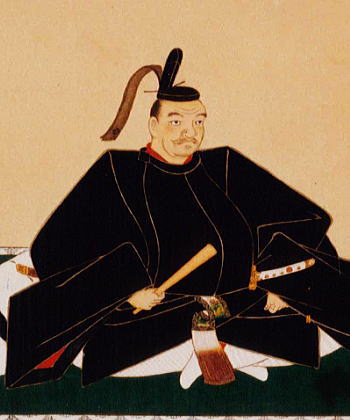
Mitsumasa’s most remarkable educational project, however, may have been the founding of Shizutani School.
Unlike a domain school reserved for samurai families, Shizutani was created primarily for the education of common people in the region. Mitsumasa ordered Tsuda Nagatada to establish it in 1670. Today it is described as the world’s oldest surviving public school for commoners.
Two years earlier, in 1668, Mitsumasa had established 123 elementary places of instruction across the domain. These were later reorganized and consolidated at Shizutani.
For its time, this was a remarkably advanced attempt to extend education beyond the privileged samurai class to the common population.
The stability of Tokugawa rule spared Mitsumasa the violent cycle of glory and ruin that defined Hideie’s life. He pursued administrative and educational reform and retired from formal rule in 1672. His grave lies in the Ikeda family cemetery at Waidani in Yoshinaga, Bizen City.
The Making of Okayama
This, in outline, is the development of Okayama from the Heian through the Edo period.
It would be misleading to say that the region began as “nothing more than an aristocratic estate.” Shikata had the character of a port settlement tied to Seto Inland Sea transport and was an important property inherited by the heads of the Fujiwara family.
Upon that ancient landscape, Naoie and Hideie built a castle and castle town in the Sengoku period. The Ikeda then developed the city and its government during the Edo period, while Mitsumasa created institutions for both samurai and commoner education.
The foundations of present-day Okayama were laid through the accumulation of these different eras.
Sources and Image Credits
- Okayama City: Shikata Estate and the Okayama Castle Town
- Okayama City: Ukita Naoie and Hideie
- Former Shizutani School: Historical Overview
- Lead photograph: “Okayama Castle (Japan)” by Lynn0927, CC BY-SA 4.0. Displayed with the site’s monochrome treatment.
- Kamatari portrait: “Portrait of Fujiwara no Kamatari”, artist unknown, public domain.
- Hideie portrait: “Ukita-Hideie-2”, artist unknown, collection of Okayama Castle, public domain.
- Mitsumasa portrait: “Ikeda Mitsumasa”, artist unknown, collection of the Hayashibara Museum of Art, public domain.
.jpg)


