Arts / Literature · Naturalism · Bizen · Solitude
Masamune Hakuchō, the Writer of Doubt
From the quiet shores of Bizen to the center of modern Japanese letters, Hakuchō pursued loneliness, skepticism, and the limits of belief.
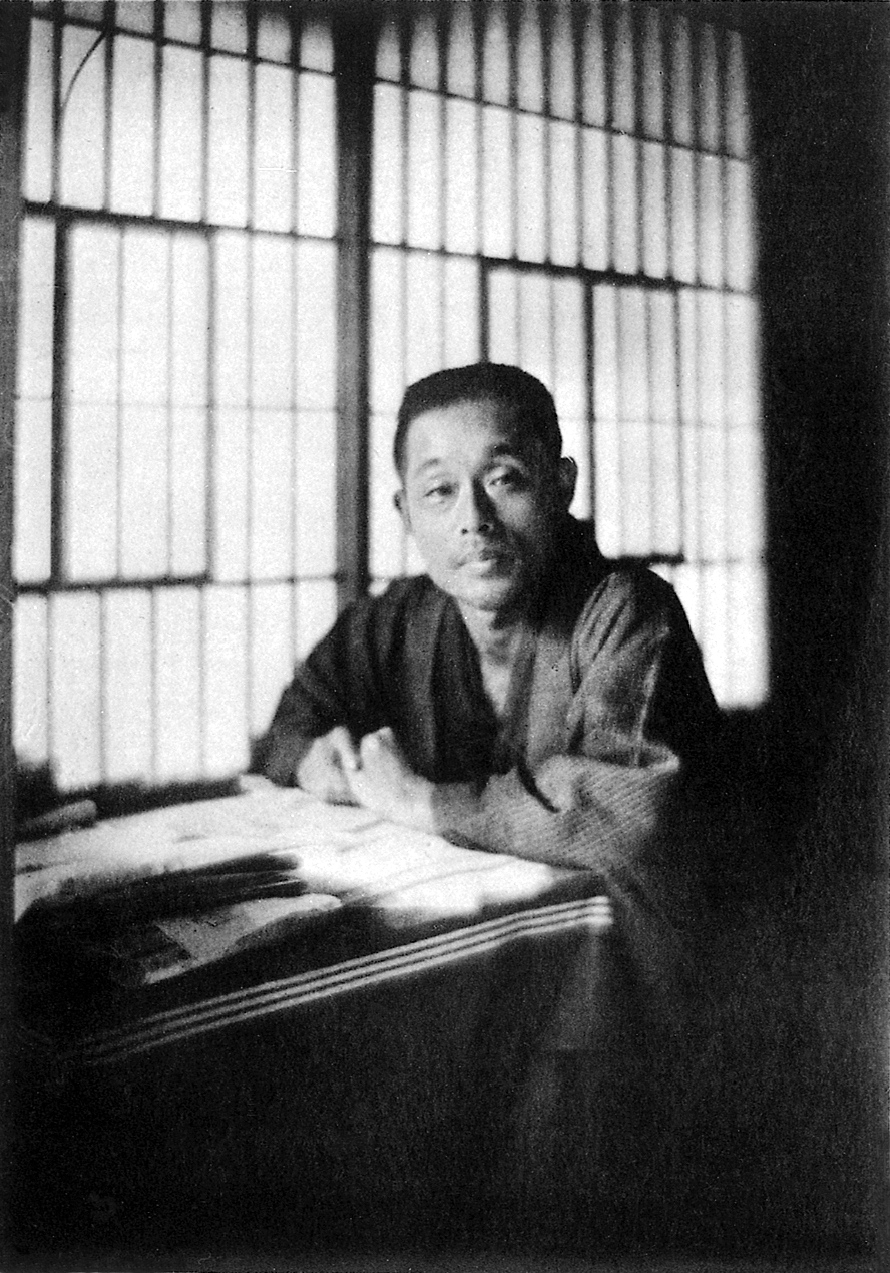
Masamune Hakuchō was one of the foremost writers of Japanese Naturalism. Beyond his fiction, he was highly regarded as a literary critic of unusual sharpness and independence. Any account of modern Japanese literature from the Meiji through the Shōwa periods would be incomplete without him.
He was born Masamune Tadao in 1879 in Honami, then part of Iri Village in Wake District, Okayama Prefecture—an area that now belongs to Bizen City. The gentle landscape of the Seto Inland Sea in which he was raised seems to remain as a quiet undertone in his later work. The site of his birthplace survives today, although the house itself no longer stands.
A Frail Child of a Prominent Family
Hakuchō’s father, Uraji, was a substantial landowner and a prominent local figure who served as a village headman. The family possessed both social standing and economic security, and Hakuchō grew up in material comfort.
His health, however, was never robust. He was sickly from childhood, and this physical frailty is often associated with the inward-looking quality that would characterize his writing. Illness made the body difficult to ignore. In Hakuchō’s fiction, the self is rarely secure or heroic; it is vulnerable, doubtful, and conscious of its own limits.
Christianity and the Problem of Belief
As a young man, Hakuchō became deeply interested in Christianity. While studying in Tokyo, he attended lectures by the Protestant pastor Uemura Masahisa and was baptized. He was also strongly influenced by Uchimura Kanzō, whose writings and lectures attracted a generation of young Japanese intellectuals seeking an ethical and spiritual language adequate to modern life.
Uchimura’s independent approach to faith—later associated with the Nonchurch movement—offered a form of Christianity that did not depend entirely upon established ecclesiastical institutions. Hakuchō read him avidly and regularly attended his lectures.
Yet faith did not settle Hakuchō’s doubts. His relationship with Christianity became one of attraction and withdrawal, conviction and skepticism. He eventually moved away from the church, but questions of belief, suffering, death, and the value of human existence continued to occupy him throughout his life. The intensity of his skepticism cannot be separated from the seriousness with which he had once sought faith.
From Tokyo Senmon Gakkō to the Newspaper World
In 1896, Hakuchō entered Tokyo Senmon Gakkō, the institution that later became Waseda University. For a young man from an old provincial family, student life in the capital brought him into a new world of Western literature, Christian thought, theater, journalism, and modern intellectual debate.
After graduating, he worked in the publishing department of his former school. Under the guidance of Shimamura Hōgetsu, he began contributing criticism to the Monday literary column of the Yomiuri Shimbun. He formally joined the newspaper in 1903.
The route from journalism into literature was common in this period. Masaoka Shiki and Natsume Sōseki also worked for newspapers. At a time when few writers could live by books alone, newspapers offered both an income and a public forum. They gave young authors a place to publish fiction, criticism, reviews, and reports while remaining close to the rapidly changing life of the city.
Whither and the Literature of Nihilism
Among Hakuchō’s best-known works is Doko e—usually rendered in English as Whither. Serialized in Waseda Bungaku and published in book form in 1908, it follows Suganuma, a dissipated magazine reporter drifting through life without a stable purpose.
The novel’s protagonist is neither moving toward a clear ideal nor affirming the richness of existence. He wanders through a world from which meaning appears to have receded. This aimlessness struck an unusual note in a literary culture that often sought moral resolution, social purpose, or the fullness of lived experience.
The work helped establish Hakuchō as a writer of nihilism. Within the broader movement of Japanese Naturalism, he came to occupy a singular position: a novelist and critic willing to pursue doubt and negation without forcing them toward consolation.
That skeptical intelligence also shaped his criticism. Hakuchō did not treat literature as a sanctuary protected from ordinary human weakness. His essays tested writers, beliefs, and aesthetic claims against the instability of actual life. The severity of his judgments made him formidable, but it also made his criticism indispensable.
A Brief Education at Shizutani
Before leaving Okayama, Hakuchō studied at Shizutani Kō, the private secondary school that carried forward the educational tradition of the historic Shizutani School. Bizen City records that he entered in 1892 and studied Chinese classics and English. Other biographical accounts indicate that he withdrew after a relatively short period.
It would be too simple to claim that this brief enrollment determined his later thought. Still, the connection is suggestive. Shizutani was one of Japan’s most important historic centers of regional education, a place where learning had long been understood as something that should reach beyond the samurai elite.
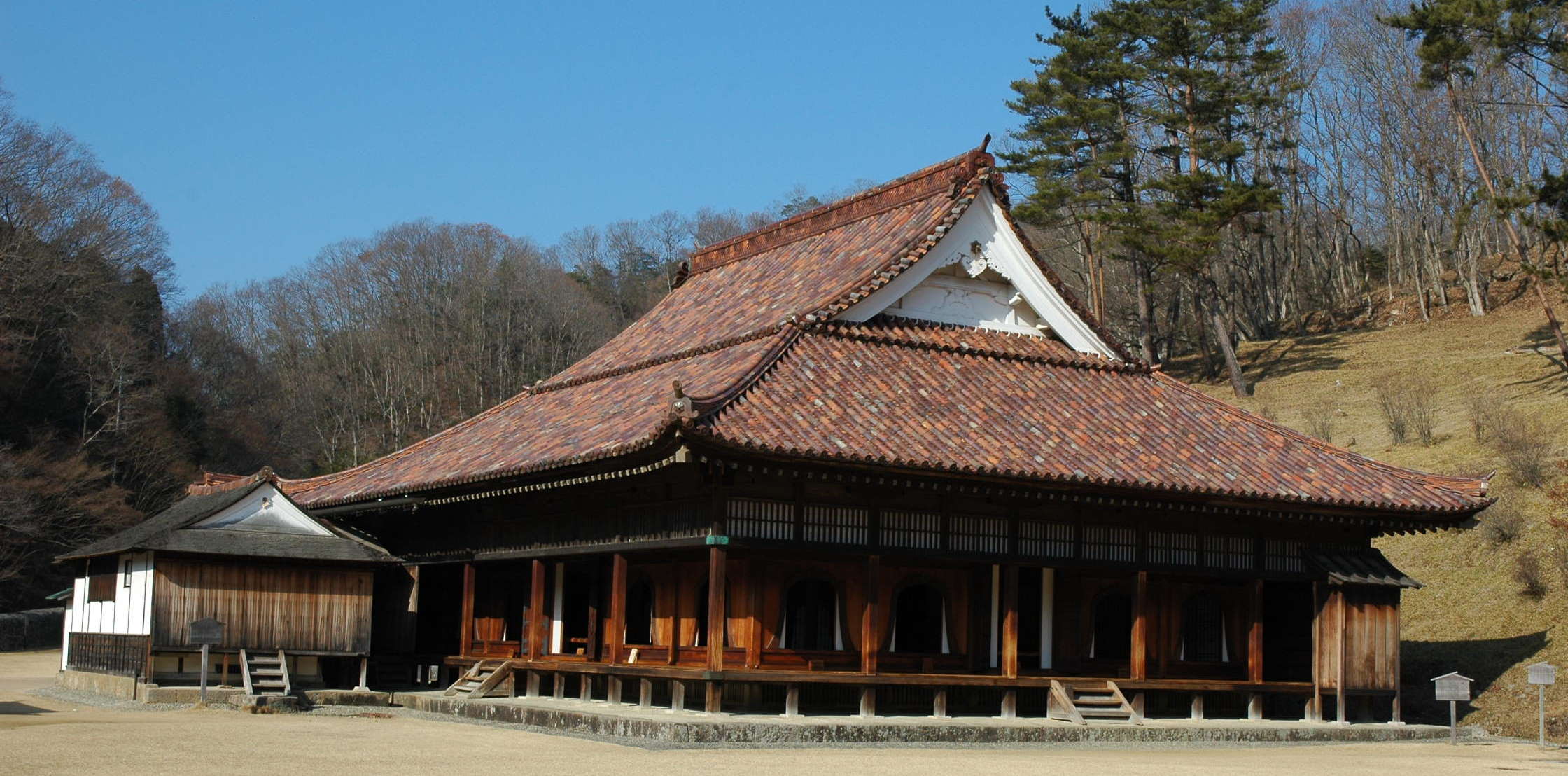
The Former Shizutani School can still be visited today. Its National Treasure lecture hall, stone walls, tiled roofs, and surrounding landscape preserve the atmosphere of a place where regional education took institutional form. For readers tracing Hakuchō’s early life, the school provides a physical point of reference between the world of rural Bizen and the modern intellectual life he would later enter in Tokyo.
The Landscape Beneath the Doubt
Hakuchō is often remembered as an uncompromising skeptic: a writer of loneliness, nihilism, and human disillusionment. Yet the place from which he came should not be forgotten.
Honami faces the quiet waters and low hills of the Seto Inland Sea. The landscape is gentle, but not empty. Fishing villages, farms, roads, and old institutions of learning bind human lives to the terrain. Even when Hakuchō’s writing moved toward metropolitan alienation and philosophical doubt, the remembered atmosphere of this region remained available to him.
At his birthplace today, the original building is gone. A monument and the enclosed ground mark the place where it once stood. The absence is fitting. Hakuchō’s literature rarely offers the comfort of complete recovery. What remains is a trace: a landscape, a name, and a body of work that continues to ask where a human being might go when certainty has fallen away.
Sources and Image Credits
- Masamune Hakuchō, Portraits of Modern Japanese Historical Figures, National Diet Library
- Masamune Hakuchō, Bizen City Literary Gallery
- Bizen City account of figures associated with Shizutani School
- Lead photograph: “Masamune Hakucho birthplace 01” by Reggaeman, licensed under CC BY-SA 3.0. Displayed with the site’s monochrome treatment.
- Portrait: “Masamune Hakucho,” photographer unknown, published in 1925, National Diet Library via Wikimedia Commons. Public domain; the Commons version includes digital cleanup.
- Shizutani photograph: “Shizutani School Auditorium” by Reggaeman, cropped by Bamse, licensed under CC BY-SA 3.0. Displayed with the site’s monochrome treatment.


