Japan / Education · History · Poverty · Place
The School in the Quiet Valley
What Shizutani School reveals about literacy, public education, and the foundations of human freedom.
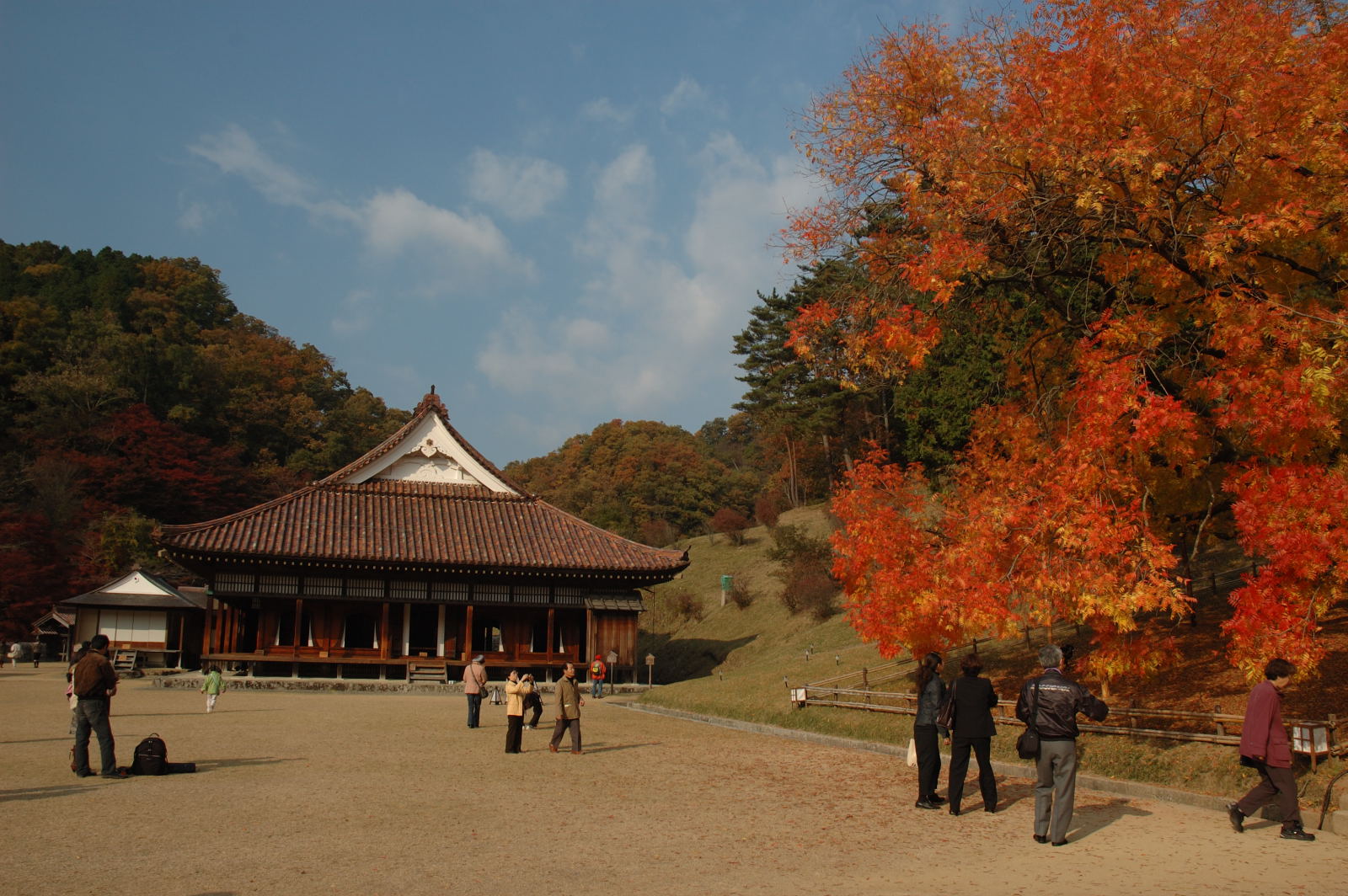
In a mountain valley in Bizen, Okayama Prefecture, a school stands behind a long stone wall.
Its lecture hall is roofed with reddish Bizen-ware tiles. Beyond it, the surrounding woods seem to hold the grounds in a deep silence. The Former Shizutani School is more than an exceptionally well-preserved work of architecture. It embodies an early conviction that education should not remain the privilege of a narrow elite, but should be opened to the people who lived and worked across the region.
It also offers a place from which to consider a larger question: why did literacy spread so widely in Japan, and what can education do for a society before that society becomes wealthy?
Education Cannot Wait for Prosperity
The Indian economist and philosopher Amartya Sen has never understood poverty as a shortage of income alone. Poverty also deprives people of capabilities: the ability to read and write, to obtain medical care, to understand the society around them, and to make meaningful choices about their own lives.
Sen has repeatedly pointed to Japan when explaining the relationship between education and development. Japan did not first become rich and only then extend education to the population. Education helped create the conditions in which economic and social development became possible.
Discussing the Asian experience, Sen traced this approach to the period beginning with the Meiji Restoration. Japan’s leaders saw the difference in productivity between their country and the United States as, in part, a difference in education. By the beginning of the twentieth century, Japan had achieved near-universal literacy. South Korea, Taiwan, Hong Kong, and Singapore later followed related paths, combining commerce with broad literacy and public action in fields the market could not adequately provide.
For Sen, the lesson has direct relevance to India. A country should not postpone basic education until poverty has disappeared. Broad, dependable schooling is itself one of the means by which poverty is overcome. Education expands a person’s opportunities, strengthens public health, and makes fuller participation in economic and political life possible.
The point is not that Japan supplied a single model that can simply be copied elsewhere. It is that development begins with human capacities. A school is not merely a consequence of prosperity. It can be one of prosperity’s foundations.
A Public School for Commoners
The history of Shizutani began almost two centuries before the Meiji Restoration.
In 1666, Ikeda Mitsumasa, lord of the Okayama Domain, began considering the establishment of a school at Shizutani as part of a wider effort to educate the people of his territory. A place for elementary instruction opened in 1668. In 1670, Mitsumasa instructed his retainer and school administrator Tsuda Nagatada to develop a permanent institution there.
The domain had already established local places of instruction across its territory. Financial pressure eventually led many of them to be reduced or closed, and their educational role was consolidated at Shizutani. By the middle of the 1670s, the institution had grown into what became known as the Shizutani academy. Construction and refinement continued for decades, and the complex reached substantially its present form in 1701.
Shizutani was different from a conventional domain school created chiefly to educate samurai. Its students were drawn primarily from the common population. Children of village headmen and farming families studied there, alongside members of samurai households and, at times, students from beyond the domain.
The site is therefore described today as the world’s oldest surviving public school established for commoners. This wording matters. Shizutani was not the first school ever built in Japan, nor was it a public school in the modern democratic sense. Its historical importance lies in the decision of a feudal government to assume responsibility for an institution in which ordinary people could learn.
Designing a School to Endure
Ikeda Mitsumasa did not ask only for a school to be constructed. He wanted it to survive far into the future.
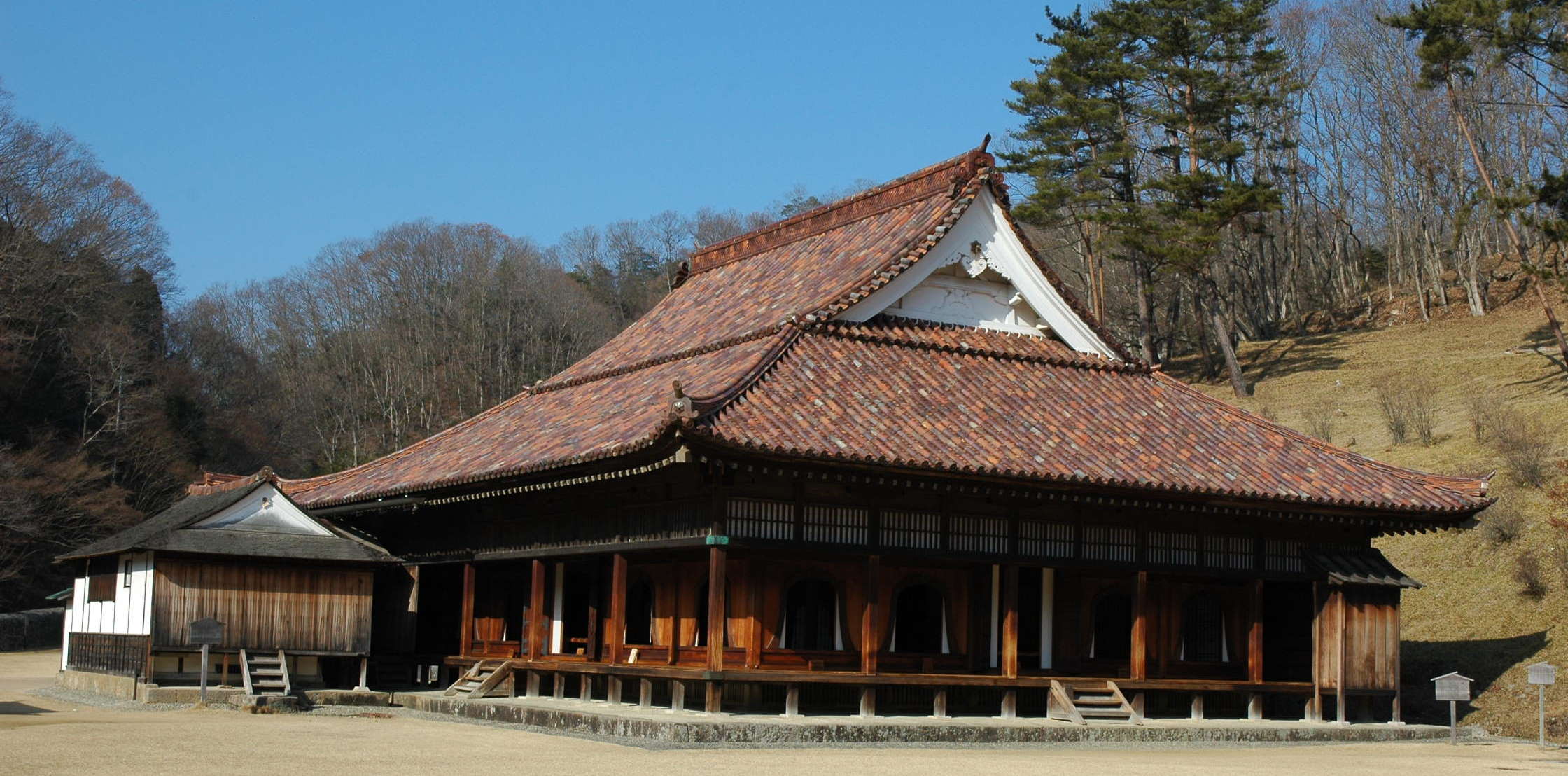
Tsuda Nagatada responded by creating both a physical institution and an economic system. The grounds came to include a lecture hall, a Confucian sanctuary, a library, and other buildings, all enclosed by a carefully constructed stone wall. The lecture hall, now designated a National Treasure, was built with selected timber and roofed with durable Bizen-ware tiles.
Nagatada also secured fields and woodland whose revenue could support the school. This independent base was intended to protect the institution from political change and fluctuations in the domain’s finances.
That arrangement reveals one of Shizutani’s most modern lessons. Education cannot be sustained by ideals alone. Teachers must be supported, buildings repaired, and learning carried from one generation to the next. A school becomes a public institution only when a society creates the material conditions for its continuity.
Literacy and the Expansion of Human Possibility
Instruction at Shizutani ranged from elementary learning to an intermediate study of the Chinese classics. Its curriculum was grounded in orthodox Neo-Confucian thought and differed profoundly from that of a modern school.
Yet opening the practices of reading, study, and discussion to commoners carried consequences that went beyond the curriculum itself.
A person who can read may understand laws and instructions, keep records, exchange letters, and encounter events beyond the limits of a village. A person who can write may describe an injustice, preserve a memory, or make a claim upon society. Literacy is not simply a technical skill. It is part of the equipment through which a human being enters public life.
This is why Sen connects education with freedom. Education may raise productivity, but its value is not exhausted by economic output. It can reduce child mortality, widen employment, strengthen a person’s voice, and increase the range of lives that person is able to choose.
Sen has also challenged the assumption that poverty itself makes mass education impossible. The history of Japan and other parts of Asia suggests a different sequence: societies need not wait for wealth before educating their people. By committing themselves to education, they enlarge the human capacities from which durable development can grow.
Looking at the World from a Mountain Valley
Shizutani became a domain school in 1870 and was temporarily closed in 1877. A private secondary-level school opened on the grounds in 1884, and the educational lineage later continued through institutions including Shizutani Middle School and Shizutani High School.
Today, the Former Shizutani School is designated a Special Historic Site, and its lecture hall is a National Treasure. In 2015, it became part of one of the first groups recognized under Japan’s Heritage program, “Educational Heritage from Early-Modern Japan.”
Its significance, however, cannot be reduced to the beauty of its buildings.
Why does a society build a school? To whom does it offer the opportunity to learn? And how does it turn education from a temporary policy into an institution capable of outliving its founders?
More than three centuries ago, a school in rural Bizen proposed one answer. The questions that Ikeda Mitsumasa and Tsuda Nagatada confronted at Shizutani are not identical to those Sen has raised in modern India. But they meet at a fundamental point: education is not an ornament added after development. It is part of the means by which people acquire the power to change their circumstances.
Societies are not transformed by declarations alone. They are transformed by creating a place where one person can learn to read—and by ensuring that the place remains open for the generation that follows.
Sources and Image Credits
- Former Shizutani School: official historical overview
- Amartya Sen on education, health, and the Japanese experience
- Amartya Sen: “The Importance of Basic Education”
- Amartya Sen interview: Time for School
- Lead photograph: “Shizutani School in Autumn” by Reggaeman, licensed under CC BY-SA 3.0. Displayed with the site’s monochrome treatment.
- Interior photograph: “Shizutani School Auditorium” by Reggaeman, cropped by Bamse, licensed under CC BY-SA 3.0. Displayed with the site’s monochrome treatment.

